
There’s something magical about a bubbling green bean casserole emerging from the oven, its golden crown of crispy onions glistening under the kitchen light. This beloved dish has graced American tables for generations, and for good reason. It’s creamy, crunchy, savory, and surprisingly simple to make. Whether you’re planning a holiday feast or just craving comfort food on a Tuesday night, this easy green bean casserole recipe will become your go-to.
Why Green Bean Casserole Deserves a Spot on Your Table

Let’s be honest: green bean casserole often gets dismissed as “that canned soup dish” or relegated to obligatory holiday duty. But when made with care and a few smart techniques, this humble casserole transforms into something genuinely special. The contrast between tender green beans, silky cream sauce, and those irresistible crispy onions creates a texture symphony that keeps people coming back for seconds.
The best part? You don’t need to be a culinary expert to nail this recipe. With just a handful of ingredients and about 40 minutes, you can create a side dish that looks impressive and tastes even better.
The Classic Easy Green Bean Casserole Recipe

Prep Time: 15 minutes
Cook Time: 30 minutes
Total Time: 45 minutes
Servings: 8-10
Difficulty: Easy
Ingredients You’ll Need

- 2 pounds fresh green beans, trimmed and cut into 2-inch pieces (or three 14.5-ounce cans, drained)
- 1 can (10.5 oz) condensed cream of mushroom soup
- 3/4 cup whole milk
- 1 1/2 cups crispy fried onions, divided
- 1/2 teaspoon garlic powder
- 1/2 teaspoon black pepper
- 1/4 teaspoon salt
- 1 cup sliced fresh mushrooms (optional but recommended)
- 2 tablespoons butter
Step-by-Step Instructions
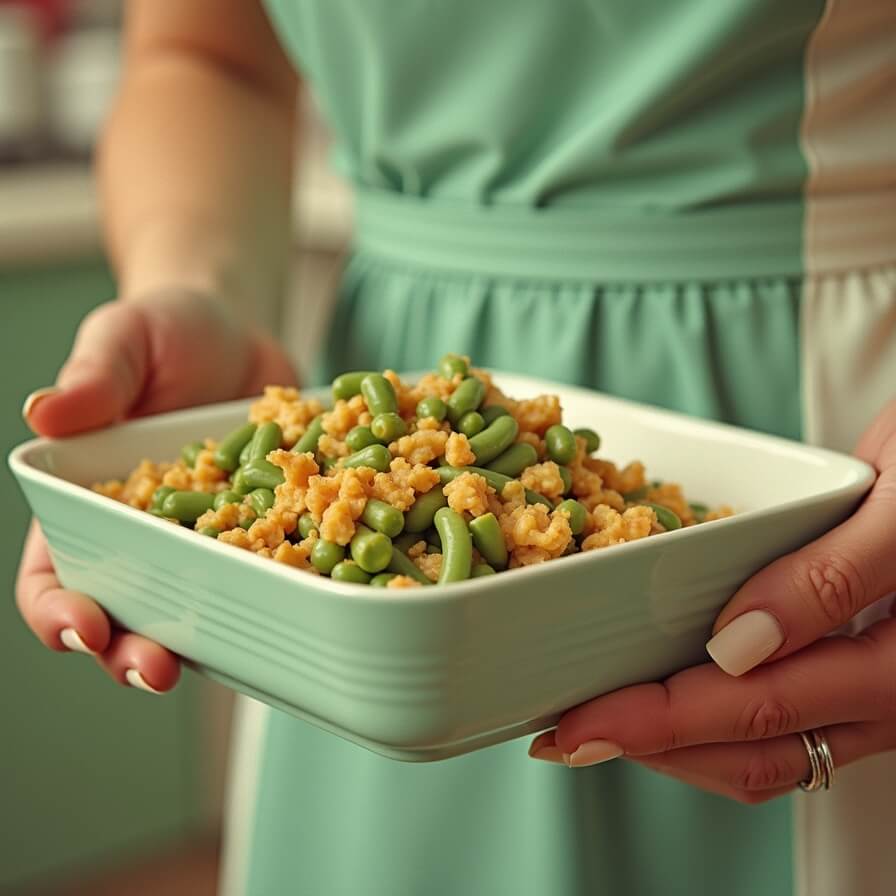
Step 1: Prepare Your Green Beans
If using fresh green beans, bring a large pot of salted water to a boil. Add the beans and blanch for 5 minutes until bright green and crisp-tender. Immediately drain and plunge into ice water to stop the cooking. This preserves their vibrant color and prevents mushiness. If using canned beans, simply drain them well.
Step 2: Build Your Creamy Base
Preheat your oven to 350°F. In a large mixing bowl, combine the cream of mushroom soup, milk, garlic powder, black pepper, and salt. Whisk until smooth and well incorporated. If you’re adding fresh mushrooms, sauté them in butter for 3-4 minutes until golden before mixing them into the sauce.
Step 3: Combine and Layer
Add the green beans to your creamy mixture along with half of the crispy onions. Gently fold everything together until the beans are evenly coated. Transfer the mixture to a greased 9×13-inch casserole dish, spreading it out evenly.
Step 4: Bake to Perfection
Slide the casserole into your preheated oven and bake for 25 minutes. The sauce should be bubbling around the edges. Remove from the oven, sprinkle the remaining crispy onions over the top, and return to the oven for another 5 minutes until the onions are golden brown and extra crispy.
Step 5: Rest and Serve
Let the casserole rest for 5 minutes before serving. This allows the sauce to thicken slightly and makes serving much easier. This creamy casserole pairs perfectly with classic comfort foods. If you love traditional dishes, try serving it alongside our slow cooker chicken and dumplings.
Nutritional Information (Per Serving)

- Calories: 145
- Protein: 3g
- Carbohydrates: 14g
- Fat: 9g
- Fiber: 3g
- Sodium: 380mg
Note: Nutritional values are approximate and may vary based on specific ingredients used.
Pro Tips for Casserole Success
Don’t Skip the Blanching: If you’re using fresh beans, blanching is your secret weapon against mushiness. It partially cooks the beans while maintaining their texture and bright green color.
Layer Your Flavors: Adding sautéed fresh mushrooms alongside the canned soup creates depth and elevates the dish from good to outstanding. The earthiness of fresh mushrooms complements the convenience of the soup base.
Watch Your Onion Timing: Add those crispy onions in two stages. The first batch gets stirred into the casserole for flavor throughout, while the final topping stays wonderfully crunchy since it’s only exposed to heat briefly.
Let It Rest: Patience pays off. Letting your casserole sit for a few minutes after baking allows the sauce to set up properly, making it easier to serve neat portions.
Creative Variations to Try
Once you’ve mastered the classic, experiment with these delicious twists:
Mediterranean Style: Add sun-dried tomatoes, a splash of white wine to the sauce, and top with panko breadcrumbs mixed with parmesan instead of onions.
Bacon Lover’s Dream: Stir in crumbled crispy bacon and use bacon drippings to sauté your mushrooms. Top with more bacon because, well, bacon.
Spicy Kick: Mix in diced jalapeños and a pinch of cayenne pepper, then top with crushed tortilla chips for added crunch.
Lighter Version: Use Greek yogurt mixed with a touch of chicken broth instead of soup, and bake at a higher temperature for caramelized edges.
The Science Behind the Creaminess

Ever wonder why milk gets added to green bean casserole? The condensed soup is quite thick on its own, and milk loosens the consistency to create a sauce that coats every bean without becoming gloopy. Milk also adds a subtle sweetness and helps the sauce bake evenly without breaking or separating. As the casserole heats, the milk proteins bind with the soup’s starches, creating that signature creamy, cling-to-the-beans texture we all crave.
Make-Ahead Magic
One of the greatest advantages of green bean casserole is its make-ahead friendliness. Assemble the entire dish up to 24 hours in advance, cover tightly with plastic wrap or foil, and refrigerate. When you’re ready to bake, add an extra 10 minutes to the cooking time since you’re starting with a cold casserole. Wait to add the final onion topping until the last 5 minutes to ensure maximum crunch. If you are preparing this for a big family gathering, you might also want to check out these other easy camping meals that work great for outdoor holiday events.
Storing and Reheating Leftovers
Store leftover casserole in an airtight container in the refrigerator for up to 4 days. Reheat individual portions in the microwave, or warm the entire dish in a 325°F oven for about 20 minutes. While the onions won’t be quite as crispy the second time around, the flavors actually deepen overnight, making leftovers something to look forward to rather than just tolerate.
Frequently Asked Questions

What are the ingredients for green bean casserole?
The essential ingredients include green beans, cream of mushroom soup, milk, crispy fried onions, and basic seasonings like salt, pepper, and garlic powder. Many recipes also incorporate fresh mushrooms and butter for added flavor and richness.
What are the 5 components of a casserole?
Every great casserole contains five key elements: a protein or vegetable base (green beans), a binding sauce (cream of mushroom soup and milk), a starch or filler (sometimes incorporated through the soup), aromatics and seasonings (garlic, salt, pepper), and a textural topping (crispy fried onions). These layers work together to create a complete, satisfying dish.
What is the best method for cooking green beans?
For green bean casserole, blanching is the superior method. Boil the beans in salted water for 4-5 minutes until crisp-tender, then immediately transfer them to ice water to halt cooking. This technique preserves their vibrant color, maintains a pleasant bite, and prevents the dreaded mushy texture that can occur during baking. Alternatively, steaming for 5-6 minutes works well if you prefer to avoid boiling.
Why add milk to green bean casserole?
Milk serves multiple purposes in green bean casserole. It thins the condensed soup to create a pourable sauce that evenly coats the beans, adds a subtle creamy sweetness that balances the savory elements, and helps prevent the sauce from becoming too thick or pasty during baking. The milk proteins also interact with the soup’s starches to create a smooth, cohesive sauce rather than a separated or grainy mixture.
What’s the secret to a good casserole?
The secret lies in balancing moisture, flavor, and texture. Start with properly prepared main ingredients that aren’t overcooked before baking. When using fresh beans, make sure your kitchen is ready. If you’re cooking on a glass cooktop, here is a guide on how to clean the top of a glass stove to keep your kitchen looking sharp before guests arrive. Use a flavorful binding sauce with the right consistency, not too thick or thin. Layer flavors through aromatics, seasonings, and quality ingredients. Finally, add a contrasting textural element on top, whether crispy onions, breadcrumbs, or cheese. Don’t overbake, and always let the casserole rest before serving so the components can settle and the flavors can meld.
Can I use heavy cream instead of milk in my green bean casserole?
Absolutely! Heavy cream creates an even richer, more luxurious sauce. However, because it’s thicker than milk, you may want to use slightly less cream or thin it with a splash of chicken broth. Keep in mind that heavy cream adds significantly more calories and fat, so it’s best reserved for special occasions when you want an extra-indulgent version of this classic dish.
How do you thicken a casserole sauce?
If your casserole sauce seems too thin, several techniques can help. First, try baking uncovered for an additional 10-15 minutes to allow excess moisture to evaporate. You can also make a slurry by mixing one tablespoon of cornstarch with two tablespoons of cold water, stirring it into the casserole before baking. Another option is to add more cream of mushroom soup or incorporate a handful of shredded cheese, which melts and naturally thickens the sauce. For a lighter approach, sprinkle a tablespoon of instant mashed potato flakes into the mixture.
Can you add milk to a casserole?
Yes, milk is a common casserole ingredient that adds moisture, creaminess, and helps bind ingredients together. It prevents dishes from becoming dry during baking and creates a cohesive sauce. Whole milk works best for richness, but you can use 2% or even unsweetened almond milk as alternatives. Just remember that lower-fat milks may result in a slightly less creamy texture.
Which material is best for casserole?
Ceramic and glass casserole dishes are ideal because they distribute heat evenly, won’t react with acidic ingredients, and can go from oven to table beautifully. Ceramic retains heat longer, keeping food warm during serving. Glass allows you to monitor browning on the bottom and sides. Cast iron is excellent for dishes that benefit from high heat retention. Avoid thin metal pans which can cause hot spots and uneven cooking.
What’s the best dish for baking a casserole?
A 9×13-inch rectangular baking dish is the gold standard for casseroles, providing the perfect surface area for even cooking and crispy edges. For smaller portions, an 8×8-inch square dish works well. Choose a dish that’s 2-3 inches deep to accommodate bubbling without overflow. For green bean casserole specifically, the shallow 9×13-inch dish creates more surface area for that beloved crispy onion topping.
Do potatoes go in a casserole?
While potatoes don’t belong in traditional green bean casserole, they’re certainly casserole all-stars in other recipes. If you wanted to create a heartier variation, you could add a layer of thinly sliced potatoes at the bottom before adding the green bean mixture, creating a hybrid dish. However, this significantly changes both the cooking time and the character of the classic recipe.
What are good side dishes for casserole?
Green bean casserole pairs beautifully with roasted turkey, glazed ham, mashed potatoes, dinner rolls, cranberry sauce, and sweet potato dishes. Since it’s creamy and rich, balance it with lighter sides like a crisp salad, roasted Brussels sprouts, or crusty bread. For holidays, it naturally fits alongside stuffing, gravy, and other traditional comfort foods.
What seasonings go well on green beans?
Green beans love garlic in all its forms, whether powder, minced fresh, or roasted. Black pepper adds subtle heat, while lemon zest brightens the flavor. Fresh or dried herbs like thyme, rosemary, and oregano complement beans beautifully. For Asian-inspired dishes, try ginger, sesame oil, and soy sauce. Smoked paprika adds depth, and a touch of nutmeg can create surprising warmth.
Is it necessary to boil green beans before cooking?
For green bean casserole, yes, blanching fresh beans is highly recommended. Raw beans won’t fully cook during the 30-minute baking time and will remain tough and fibrous. Blanching gives them a head start while maintaining their structure. However, if you’re using canned green beans, they’re already fully cooked, so you can skip this step entirely. Frozen beans fall somewhere in between and typically only need a brief thaw and drain.
How does Gordon Ramsay cook green beans?
Gordon Ramsay’s approach to green beans emphasizes simplicity and proper technique. He blanches them in heavily salted boiling water until just tender but still with a bite, shocks them in ice water to preserve color, then quickly sautés them in a screaming hot pan with butter, garlic, and lemon juice. His key principle: don’t overcook the beans. They should still have texture and vibrant color, never dull or limp.
What is the best oil for cooking green beans?
For sautéing green beans, olive oil offers wonderful flavor, though its lower smoke point means you should use medium-high rather than high heat. For higher-heat cooking, avocado oil or grapeseed oil work excellently without imparting strong flavors. Butter (technically not oil) creates the most flavorful results, especially when browned slightly. For Asian-style preparations, toasted sesame oil adds distinctive nuttiness.
What seasonings go well in beans?
Beyond the seasonings mentioned for green beans specifically, dried beans benefit from cumin, coriander, chili powder, bay leaves, and oregano. Smoked paprika or chipotle adds depth. Fresh cilantro, parsley, and scallions brighten bean dishes. Acidic elements like lime juice, vinegar, or tomatoes balance the earthiness of beans. Don’t forget aromatics like onions, celery, and bell peppers for foundational flavor.
Do green beans need to be soaked before cooking?
Fresh green beans require no soaking whatsoever. Simply rinse, trim the ends, and they’re ready to cook. You might be thinking of dried beans (like pinto or kidney beans), which do need soaking to rehydrate before cooking. Green beans are a completely different category of vegetable and are cooked fresh or frozen without any prep time beyond washing and trimming.
What is the best meat for green bean stew?
For a green bean stew, lamb creates a rich, traditional flavor popular in Mediterranean and Middle Eastern cuisines. Beef chuck roast provides hearty, fall-apart tenderness perfect for long simmering. Pork shoulder adds sweetness and richness. For lighter options, chicken thighs stay moist during extended cooking. Many cultures also make green bean stew vegetarian, relying on tomatoes, potatoes, and olive oil for substance.
Why is my green bean casserole not thickening?
Several culprits could be at play. You may have added too much milk, creating an overly thin sauce. Using low-fat or skim milk provides less natural thickening than whole milk. Your oven temperature might be too low, preventing proper evaporation. The casserole may need more baking time, especially if it went into the oven cold. Finally, some cream of mushroom soup brands are thinner than others. Fix a thin casserole by baking uncovered for an extra 10-15 minutes or stirring in a cornstarch slurry before baking.
What sauces pair well with green beans?
Green beans shine with brown butter sauce (butter cooked until nutty and golden), hollandaise for an elegant touch, or a simple lemon-garlic butter. Asian-inspired options include teriyaki, oyster sauce, or a sesame-ginger glaze. For Mediterranean flair, try a tomato-based marinara or puttanesca sauce. Creamy options beyond the classic casserole include alfredo, cheese sauce, or a tangy mustard cream.
How to improve the taste of green beans?
Start with quality fresh or frozen beans rather than canned when possible. Don’t overcook them—they should retain some snap. Season generously with salt, which dramatically enhances their natural flavor. Add aromatics like garlic, shallots, or onions. Incorporate an acid element such as lemon juice or vinegar to brighten the flavor. Consider umami boosters like soy sauce, parmesan cheese, or bacon. Finally, add textural contrast through toasted nuts, crispy breadcrumbs, or fried onions.
How to make green bean casserole not mushy?
The key is controlling moisture and cooking time. Use fresh or frozen beans rather than canned if possible, as canned beans are already very soft. Blanch fresh beans briefly—only 4-5 minutes—so they’re still firm. Drain all ingredients thoroughly to remove excess liquid. Don’t add extra milk beyond what the recipe calls for. Bake at the correct temperature (350°F) and don’t overbake. Finally, resist stirring during baking, which can break down the beans and release more moisture.
Should I put soy sauce in my green bean casserole?
While not traditional, a tablespoon of soy sauce can add wonderful umami depth to green bean casserole without making it taste Asian. Soy sauce enhances the savory mushroom flavors and adds complexity. If you’re going this route, reduce the salt in your recipe slightly since soy sauce is quite salty. For a more conventional approach, stick with garlic powder and black pepper. However, if you’re making an intentionally Asian-inspired version with sesame oil and ginger, soy sauce absolutely belongs.
Final Thoughts
Green bean casserole is more than just a holiday side dish—it’s a versatile, comforting classic that deserves a place in your regular cooking rotation. With this easy recipe and all the tips and variations we’ve covered, you’re well-equipped to create a casserole that will have everyone reaching for seconds.
Whether you stick with the traditional version or experiment with creative twists, the most important ingredient is the love and care you put into making it. So preheat that oven, grab your ingredients, and get ready to create something delicious.
Have you tried this recipe? I’d love to hear about your experience! Leave a comment below with your favorite variation or any tips you discovered along the way. And if you found this guide helpful, please share it with your fellow home cooks—everyone deserves to master this comfort food classic!
Don’t forget to pin this recipe for your next holiday gathering or weeknight dinner. Happy cooking!
Leave a Reply