
Quick Answer
Most weddings last 5 to 6 hours total from the start of the ceremony through the end of the reception. A secular or civil ceremony typically runs 20 to 30 minutes, while a Catholic ceremony with full Mass takes 60 to 90 minutes. A standard wedding reception runs 4 to 5 hours, including a 60-minute cocktail hour followed by 3 to 4 hours of dinner and dancing. When you factor in morning preparations, the full wedding day for the bridal party spans 10 to 12 hours or more. What affects the total length most: ceremony type, religious traditions, number of guests, speeches, and how strictly the timeline is managed.
How Long Is a Wedding in Total

The Standard 5 to 6 Hour Wedding Explained
Most weddings last 5 to 6 hours total from the start of the ceremony through the end of the reception. That is the national average, and it holds across the vast majority of American weddings regardless of venue style or guest count.
Think of it this way: a 30-minute ceremony, a 60-minute cocktail hour, and a 4-hour reception gets you to exactly 5.5 hours. That is the template most couples work from, even if they do not realize it.
For guests, 5 to 6 hours is the general rule of thumb for clearing your schedule. Give yourself a little buffer on either end for parking, travel, and the inevitable delays that come with any event involving hundreds of people getting dressed at the same time.
What Is Included in That Time
The 5 to 6 hour total covers ceremony through send-off. It does not include morning prep, which is its own chunk of time entirely.
Here is the typical breakdown:
- Guest arrival: 30 minutes before the ceremony starts
- Ceremony: 20 to 90 minutes depending on type
- Cocktail hour: 60 minutes
- Reception dinner, toasts, and first dances: 60 to 90 minutes
- Open dancing and entertainment: 2 to 3 hours
- Grand exit: 15 to 20 minutes
Each of those pieces stacks on top of the last. If your ceremony runs long, everything else shifts. That is why building the timeline carefully at the start saves so much stress on the actual day.
What Can Make a Wedding Run Longer or Shorter
A few things reliably add time. A religious ceremony with rituals, sacraments, or multilingual elements takes longer than a civil one. A large guest count adds time to seating, serving dinner, and moving between locations. More speeches mean more reception time. A venue with a strict end time forces things to stay on track, while a private venue might let the night run until 1 AM.
What shortens a wedding? A small guest list, a civil ceremony, no formal dinner service, or a deliberate choice to skip certain traditions like garter tosses or bouquet throws. Couples who trim the guest list to under 50 people are often surprised how much faster every part of the day moves, from seating to dinner service to the photo sessions.
The venue type matters too. An all-in-one venue where the ceremony and reception are steps apart saves 30 to 45 minutes compared to a setup where guests have to drive between two separate locations.
Wedding Timeline Breakdown Table

| Part of the Day | Typical Duration | Notes |
|---|---|---|
| Morning prep (hair and makeup) | 3 to 5 hours | Longer for larger bridal parties |
| Pre-ceremony photos | 30 to 60 minutes | First look adds 30 minutes |
| Guest arrival | 30 minutes | Before ceremony start time |
| Ceremony | 20 to 90 minutes | Depends on type |
| Post-ceremony photos | 30 to 60 minutes | Family and wedding party |
| Cocktail hour | 60 minutes | Standard across most weddings |
| Reception dinner | 60 to 90 minutes | Including toasts and speeches |
| Dancing and entertainment | 2 to 3 hours | Varies by couple preference |
| Grand exit and send-off | 15 to 20 minutes | Usually ends the night |
| Total ceremony and reception | 5 to 6 hours | National average |
| Total full wedding day | 10 to 12+ hours | Including morning prep |
How Long Is a Wedding Ceremony
Secular and Civil Ceremony Length
The average wedding ceremony lasts 20 to 30 minutes for a secular service. Civil ceremonies performed by a judge, justice of the peace, or officiant with no religious component are the shortest option. They include a brief welcome, vows, ring exchange, and pronouncement. Some elopement ceremonies are as short as 10 minutes.
If you are writing your own vows, add 5 to 10 minutes. If you are including readings, add another 5 minutes per reading. Live music during the processional and recessional adds time on each end too. A string quartet playing as guests arrive and as the bridal party walks in can add 10 minutes before the officiant even says a word.
Religious Ceremony Length by Faith
Religious ceremonies vary widely. A Protestant service typically runs 20 to 30 minutes, similar to a civil ceremony. A Jewish ceremony with a chuppah, wine blessings, and the Sheva Brachot runs 30 to 45 minutes. A Muslim Nikah is also 30 to 45 minutes for the core ceremony, though surrounding traditions may extend it.
The average wedding ceremony lasts 60 to 90 minutes for a Catholic ceremony with full Mass. That includes the Liturgy of the Word, the Rite of Marriage, and the Liturgy of the Eucharist. If Communion is offered to all guests, plan for the longer end of that range.
Hindu ceremonies run longest of the major traditions, often 2 to 3 hours and sometimes spanning multiple days of celebration.
What Adds Time to a Ceremony
A few things will push a ceremony past its scheduled length. Unity ceremonies like candle lightings or sand pourings add 5 to 10 minutes. A choir or live musicians during the ceremony add time. A large guest count means a longer processional. Detailed programs with multiple readings or musical interludes add time at every step.
On the logistical side, a venue that is hard to seat guests quickly, or a bridal party that is larger than 8 people, will add several minutes to the processional alone. If your venue has a single aisle and 200 guests, getting everyone seated before the ceremony starts takes longer than it looks on paper.
Weather also matters for outdoor ceremonies. Delays from heat, wind adjusting decor, or guests needing extra time to find shaded seating can quietly push the start time back 10 to 15 minutes.
Ceremony Type Duration Comparison Table
| Ceremony Type | Typical Duration | Notes |
|---|---|---|
| Civil or secular | 15 to 30 minutes | Shortest option |
| Elopement ceremony | 10 to 20 minutes | Minimal attendees |
| Protestant | 20 to 30 minutes | Standard Christian ceremony |
| Jewish | 30 to 45 minutes | Includes chuppah and Sheva Brachot |
| Muslim Nikah | 30 to 45 minutes | Core ceremony is brief |
| Catholic without Mass | 30 to 45 minutes | Shorter than full Mass |
| Catholic with full Mass | 60 to 90 minutes | Includes Liturgy of the Eucharist |
| Hindu ceremony | 2 to 3 hours | May span multiple days |
How Long Is a Wedding Reception
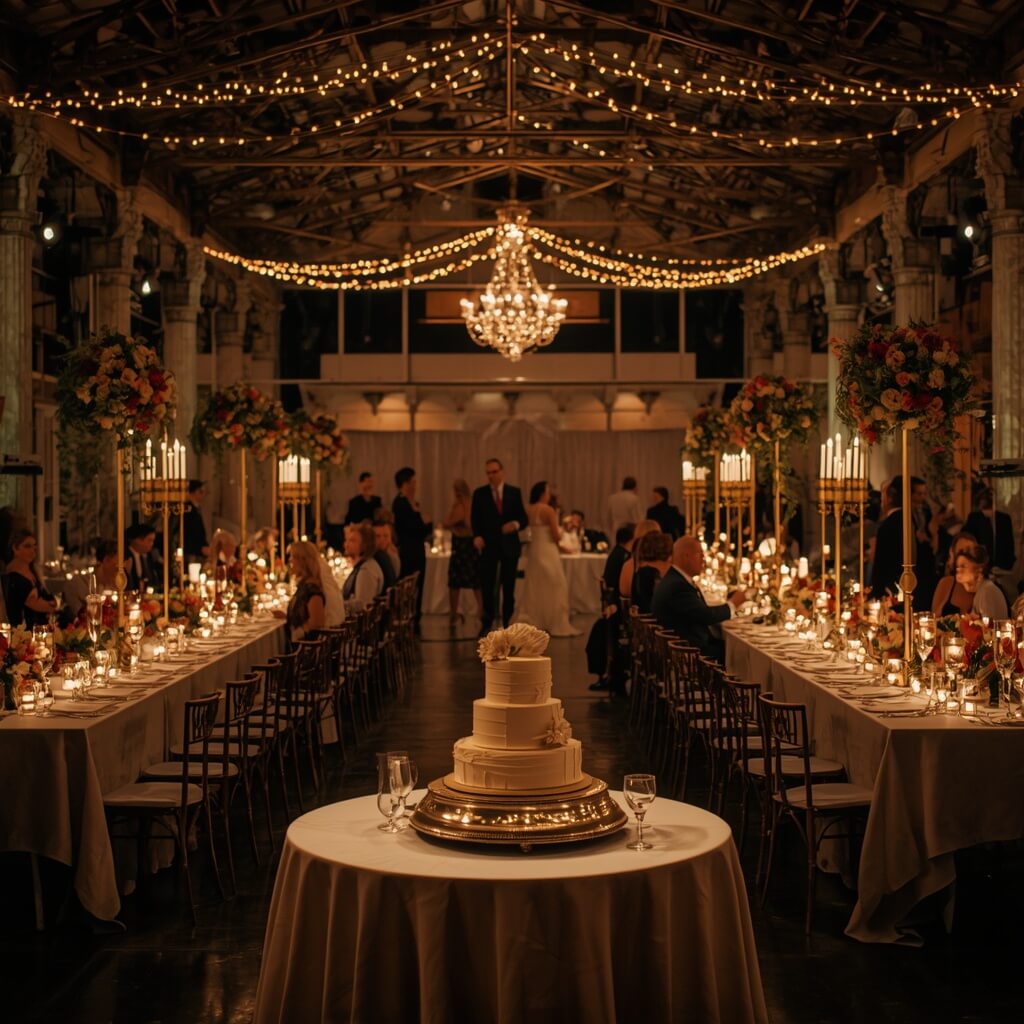
A typical wedding reception runs 4 to 5 hours, including one hour for cocktails and 3 to 4 hours for dinner and dancing. Here is how each piece of that time breaks down.
Cocktail Hour: How Long It Lasts
The cocktail hour is almost always exactly 60 minutes. It runs while the couple is taking post-ceremony photos, and it gives guests a chance to move from the ceremony space to the reception venue, grab a drink, and settle in before dinner is announced.
Some couples extend cocktail hour to 90 minutes if they need more time for photos, but guests tend to get restless past the 75-minute mark. If you need extra photo time, consider building it into the schedule without officially calling it a cocktail hour extension. Keep the passed appetizers coming and the bar open, and most guests will stay comfortable for up to 75 minutes without feeling like something has gone wrong.
Dinner Service: How Long to Plan For
Dinner service at a wedding typically runs 60 to 90 minutes from the moment the first course is served to when the last plate is cleared. The exact time depends on your service style.
A plated dinner with multiple courses takes longer than a buffet. A buffet with 200 guests takes longer to cycle through than one with 80. A family-style service can move faster or slower depending on how the tables are managed. As a general planning rule, use 75 minutes for a plated dinner and 60 minutes for a buffet.
Talk to your caterer about their pacing. Some caterers run a tight service and will have everything cleared in 55 minutes. Others build in natural pauses between courses. Knowing how your caterer works is more useful than any general estimate.
Speeches and Toasts: How Long They Take
Speeches at a wedding typically run 20 to 30 minutes total, assuming two to three speakers. A best man speech, a maid of honor toast, and brief words from the parents or the couple themselves gets you to that range comfortably.
Each individual speech should run 3 to 5 minutes. Longer than that and guests disengage, especially once they have been sitting for a while. If you are planning multiple speakers, set a firm time limit and communicate it clearly in advance. For more inspiration and structure, check out these best man speech ideas to help your speakers stay engaging and on point without running long.
One practical tip: schedule speeches during dinner rather than after. Guests have something to do while they listen, the energy stays higher, and you preserve more of the dancing block for later in the night.
First Dance and Special Dances
Budget 15 to 20 minutes for the formal dances. That includes the couple’s first dance, the parent dances, and any bridal party dance. If each song runs 3 to 4 minutes, you are looking at 4 to 5 songs total for the formal portion.
Many couples choose to shorten their song selections or fade them at the 2-minute mark to keep things moving. Fading works well and most guests do not even notice. A 4-minute slow song can feel very long on a dance floor with 150 people watching. Fading at 90 seconds to 2 minutes keeps the moment meaningful without the awkward silence that comes when a song outstays its welcome.
Cake Cutting and Dessert
The cake cutting is a brief moment, usually 10 to 15 minutes when you factor in the photos, the actual cutting, and the cake service beginning for guests. Some venues handle dessert service quickly; others build it into the flow between dancing sets. It does not need its own major block of time.
If you are doing a dessert bar or a dessert table in addition to or instead of a cake, factor in the extra service time. A dessert station that guests serve themselves works faster than one requiring staff to plate and deliver.
Dancing and Entertainment
Open dancing is where the reception breathes. Most receptions allocate 2 to 3 hours for dancing after the formal events are finished. This is the part that can expand or contract based on guest energy, venue curfew, and how much the couple wants to invest in DJ or band time.
A high-energy crowd can make 2 hours feel perfect. A crowd that includes a lot of older guests or families with young children might wind down closer to the 90-minute mark. A good DJ or band reads the room and adjusts. If the floor is full at 9:30 PM, they keep the energy up. If it is thinning out, they start transitioning toward slower songs that signal the end of the night gracefully.
The Grand Exit and Send-Off
Most grand exits take 15 to 20 minutes to organize and execute. Coordinating guests with sparklers, flower petals, or ribbon wands, getting everyone into position, and actually running the exit takes longer than people expect.
Many couples do a staged first exit to get the photos, then return for another 20 to 30 minutes before leaving for real. If you want a clean timeline end, communicate clearly with your coordinator about when the formal exit is happening. Guests who are still dancing often do not notice the couple has left until the lights come up, so the exit itself rarely disrupts the energy in the room.
How Long Is the Full Wedding Day for the Bridal Party

When you include morning preparations, the full wedding day for the bridal party spans 10 to 12 hours or more. For a 4:30 PM ceremony, that means hair and makeup often starts at 9:00 or 10:00 AM. By the time the grand exit happens at 9:30 or 10:00 PM, the couple has been going for 12 to 13 hours straight.
Morning Hair and Makeup Timeline
The bride typically needs 90 minutes for hair and 60 to 90 minutes for makeup, totaling around 2.5 to 3 hours in the chair. Each bridesmaid takes approximately 45 minutes for hair and 45 minutes for makeup.
Do the math for your group early. Five bridesmaids with a single hair stylist and a single makeup artist takes 7.5 hours for attendants alone, before the bride even sits down. Most bridal parties bring in multiple stylists to run everything simultaneously and compress the morning to 3 to 5 hours total.
Before everyone sits in the chair, make sure the dresses are ready. The Conair Turbo ExtremeSteam Handheld Garment Steamer is a go-to for morning prep: it heats up in 40 seconds, runs for 20 continuous minutes, and handles delicate bridal fabrics with a 3-in-1 attachment, complete with Good Housekeeping Seal approval. Steaming wedding and bridesmaid dresses during the morning hours prevents last-minute wrinkle panic right before photos.
Build a breakfast or snack break into the morning schedule too. Hair and makeup sessions that run 4 to 5 hours without a food break leave everyone tired before the day has even started.
Getting Dressed and Pre-Ceremony Photos
After hair and makeup, budget 30 to 60 minutes for getting dressed and capturing the getting-ready moments. This includes putting on the dress, attaching the veil, and the first look with the bridal party. Many photographers block this time specifically because the light and emotion during this portion are some of the best of the whole day.
Do not underestimate how long it takes to actually get into a wedding dress. Corset backs, cathedral trains, and layers of tulle take time. If you have a bustle that will need to be done before the reception, make sure whoever is handling it knows the style of bustle on your gown and has practiced it at least once.
First Look Photos: When to Do Them and How Long
A first look, where the couple sees each other privately before the ceremony, adds approximately 30 minutes to the pre-ceremony schedule. Most photographers block 20 to 30 minutes for the first look itself.
The payoff is real. Doing the first look means you can complete most of your couples portraits before the ceremony, freeing up cocktail hour time instead of disappearing from your own party for an hour of photos. Couples who skip the first look typically spend 45 to 60 minutes after the ceremony doing portraits, which cuts into the cocktail hour significantly.
Family and Wedding Party Photos After Ceremony
Post-ceremony family formals and wedding party portraits take 30 to 60 minutes. The more people, the longer it takes. A shot list with 15 family combinations runs longer than one with 6. Having a designated family wrangler, usually a coordinator or trusted family member with a copy of the shot list, cuts this time significantly.
Your photographer is a major factor in how efficiently this time is used. For couples still searching, this guide on how to find a wedding photographer covers what to look for in someone who can manage a full wedding day timeline without losing time between shots.
Sample Wedding Day Schedules
There is no one-size-fits-all wedding schedule. The right timeline depends on your ceremony start time, venue, and how many elements you are including. Here are three real-world examples to use as a starting point.
Sample 5-Hour Wedding Schedule Table
| Time | Event | Duration |
|---|---|---|
| 4:00 PM | Guests arrive | 30 minutes |
| 4:30 PM | Ceremony begins | 30 minutes |
| 5:00 PM | Cocktail hour | 60 minutes |
| 6:00 PM | Reception begins, introductions, first dance | 20 minutes |
| 6:20 PM | Dinner service begins | 60 to 75 minutes |
| 7:00 PM | Toasts and speeches | 20 to 30 minutes |
| 7:30 PM | Cake cutting | 15 minutes |
| 7:45 PM | Open dancing begins | 90 minutes |
| 9:15 PM | Grand exit and send-off | 15 minutes |
| 9:30 PM | Reception ends |
Morning Wedding Timeline
Morning weddings are less common but work beautifully for brunch receptions and budget-conscious couples, since venue rates are often lower for daytime slots. They also work well for outdoor venues in warmer climates where afternoon heat makes a late ceremony uncomfortable.
| Time | Event |
|---|---|
| 7:00 AM | Hair and makeup begins |
| 10:00 AM | Getting dressed and pre-ceremony photos |
| 10:30 AM | Guests arrive |
| 11:00 AM | Ceremony |
| 11:30 AM | Cocktails and light bites |
| 12:30 PM | Brunch reception begins |
| 3:00 PM | Cake cutting |
| 3:30 PM | Grand exit |
| 4:00 PM | Reception ends |
Afternoon Wedding Timeline
An afternoon start around 1 to 2 PM works well for venues with natural light and outdoor spaces. The reception winds down early enough for guests with young children, and you still get the golden-hour window for portrait photography in the late afternoon.
| Time | Event |
|---|---|
| 8:00 AM | Hair and makeup begins |
| 12:00 PM | Getting dressed and first look |
| 12:30 PM | Wedding party photos |
| 1:30 PM | Guests arrive |
| 2:00 PM | Ceremony |
| 2:45 PM | Cocktail hour |
| 3:45 PM | Reception begins |
| 5:00 PM | Dinner |
| 6:00 PM | Dancing |
| 8:00 PM | Grand exit |
Evening Wedding Timeline
Most US weddings start between 3 PM and 5 PM, making an afternoon-to-evening flow the most common structure. A 5 PM or later ceremony feels festive and gives the couple the full drama of a candlelit or golden-hour setting.
| Time | Event |
|---|---|
| 9:00 AM | Hair and makeup begins |
| 1:00 PM | Getting dressed and photos |
| 4:30 PM | Guests arrive |
| 5:00 PM | Ceremony |
| 5:45 PM | Cocktail hour |
| 6:45 PM | Reception begins |
| 8:00 PM | Dinner and speeches |
| 9:00 PM | Dancing |
| 11:00 PM | Grand exit |
| 11:30 PM | Venue end time |
How Ceremony Type Affects Total Wedding Length

Catholic Wedding With Full Mass
A Catholic wedding with full Mass is the longest ceremony type in common use, running 60 to 90 minutes. The structure is fixed: it includes the Liturgy of the Word (Scripture readings and a homily), the Rite of Marriage (vows, rings, and blessing), and the Liturgy of the Eucharist (Communion).
If both the bride and groom are Catholic and Communion is offered to the full congregation, expect to be at the longer end of that range. If only the couple receives Communion, the ceremony may move faster. Couples planning a Catholic Mass should build a full 90-minute block into the timeline and treat anything shorter as a bonus.
Jewish Wedding
A Jewish wedding ceremony typically runs 30 to 45 minutes. It includes the signing of the ketubah (marriage contract), the procession to the chuppah (ceremonial canopy), the exchange of rings, the reading of the Sheva Brachot (seven blessings), and the breaking of the glass.
Some Jewish weddings, particularly those with a longer service or additional rituals, run to 60 minutes. Orthodox ceremonies may include additional prayers. The Tisch and Bedeken, pre-ceremony traditions where the couple and their families gather separately, also add 30 to 60 minutes before the formal ceremony even begins.
Hindu Wedding
A Hindu wedding ceremony is the most time-intensive of the major traditions, typically running 2 to 3 hours. The ceremony includes multiple rituals: the Ganesh puja, Kanyadan (giving away of the bride), the seven steps around the sacred fire (Saptapadi), and the Mangalsutra (tying of the sacred necklace).
Many Hindu weddings also span multiple days, with Mehndi and Sangeet celebrations the day before and sometimes a post-wedding brunch the following day. When you factor in the full celebration, a Hindu wedding weekend can represent 20 or more hours of events.
Muslim Nikah Ceremony
The Nikah itself is a brief ceremony, typically 30 to 45 minutes. It involves the signing of the marriage contract, the Ijab-Qabul (offer and acceptance by both parties), the Mahr (marriage gift), a reading from the Quran, and a short sermon. The ceremony can be performed in a mosque, home, or any private setting.
Reception and walima celebrations following the Nikah are separate events and can be elaborate multi-hour affairs depending on family traditions and the size of the guest list.
Protestant Wedding
Protestant ceremonies run 20 to 30 minutes. The structure typically includes Scripture readings, a brief sermon or homily, vows, ring exchange, and a closing prayer. Some denominations include congregational singing, which can add 10 to 15 minutes.
Non-denominational Christian ceremonies follow a similar format and timeline. The couple’s personal choices, like how many songs, how many readings, and whether there is a unity ceremony, have more effect on the length than the denomination itself.
Civil Ceremony
A civil ceremony is the shortest of all formats. With a justice of the peace or licensed officiant, the ceremony typically runs 15 to 30 minutes. Some courthouse ceremonies are as brief as 10 minutes for the legal components alone.
Couples who want a brief ceremony but still want something meaningful often use a civil structure as the base, then add personal vows, a reading from a friend, and a musical moment to bring it to 20 to 25 minutes. That gives you a complete ceremony that still respects everyone’s time.
How to Build Your Own Wedding Day Timeline
Start With Your Venue Hire Time
Your venue contract tells you exactly when your event begins and ends. That is your hard outer boundary. Most venues are booked in 5 to 8 hour blocks, which is why the 5 to 6 hour ceremony-to-reception standard exists. Overtime fees are real: going past your contracted time typically costs $200 to $1,000 per additional hour beyond the standard rental period.
Start by writing down your venue start time and your venue end time. Everything else fits inside those two numbers.
Some venues include setup and breakdown time within your block. Others give vendors a separate access window before guests arrive. Clarify this early, because losing an hour of “event time” to vendor setup changes your math significantly. If your block is 6 hours but vendors need the first hour, you have 5 hours for the actual event.
Work Backwards From the End Time
Once you have your end time, subtract. If the reception ends at 10 PM and you want a 15-minute grand exit, dancing ends at 9:45. If dancing runs 2.5 hours, dinner ends at 7:15. If dinner takes 75 minutes, it starts at 6:00. That means cocktail hour runs from 5:00 to 6:00, and your ceremony ends by 5:00 PM. A 30-minute ceremony puts your start time at 4:30 PM.
Working backwards removes guesswork and immediately reveals whether your vision fits the clock. If your math is not adding up, you will know early enough to make adjustments, not the morning of the wedding.
Add Buffer Time at Every Stage
Every transition in a wedding takes longer than it looks on paper. Add 10 to 15 minutes of buffer between major segments: between the ceremony ending and cocktail hour beginning, between cocktail hour and the reception introduction, between dinner and dancing. These buffers absorb delays from photos running long, guests getting seated slowly, or the kitchen needing an extra 10 minutes.
Couples who build in buffer time feel calm on the wedding day. Couples who do not spend the night watching the clock.
For detailed timeline pages, checklists, and planning worksheets, The Knot Ultimate Wedding Planner and Organizer is the top-rated binder for this exact purpose. It is a 144-page ring-bound planner with a dedicated wedding day timeline section for mapping every hour from prep through send-off, and it holds the number one bestseller spot in event planning on Amazon for good reason.
How to Keep Things Running on Time
Assign one person, whether a professional coordinator or a highly organized friend, to be the timeline keeper for the day. That person watches the clock so the couple does not have to.
Communicate the timeline to your vendors at least a week before the wedding. Your photographer, caterer, DJ, and venue coordinator should all have the same document. When everyone knows what is supposed to happen and when, transitions happen faster. A vendor who is surprised by a schedule change is a vendor who loses time getting ready for the next segment.
If things do start running behind, the timeline keeper’s job is to make small adjustments quietly, not to announce the delay to the room. Trim a few minutes from cocktail hour, ask the DJ to cut a song short, or skip one family photo combination. Small adjustments compound and you recover time faster than you think.
Tips for Guests on How Long to Expect
What Time to Arrive
Arrive at the ceremony venue 15 to 30 minutes before the listed start time. That window lets you park, find a seat, and settle in before the processional begins. Many ceremonies close the doors or dim the lights to signal that seating is closed. If you arrive after the ceremony has started, you may need to wait in the back or at the sides until a natural pause.
For outdoor weddings, arrive even earlier. Parking at outdoor venues can be a longer walk, and seating fills in less predictably. If there are multiple ceremony options for shade or sun, arriving early means you get to choose.
How Long to Clear Your Schedule
If you are attending the ceremony and full reception, clear 6 to 7 hours from your schedule. That accounts for the 5 to 6 hour event itself plus travel to and from the venue. If the venue is far from home or if you are unfamiliar with parking, add more buffer.
If you are only attending the ceremony, you are looking at 1 to 2 hours total from arrival to departure.
For guests who need to arrange childcare or travel accommodations, building in that extra hour on each end removes the stress of racing the clock during what should be a fun day.
What Happens If You Need to Leave Early
It happens, and couples understand. If you need to leave during the reception, the best moments to slip out are during transitions: between dinner and dancing, during a set break, or between speeches. Avoid leaving during the first dance, the cake cutting, or the grand exit if you can help it.
If you need to leave during the ceremony, wait for a musical moment or a reading to move as quietly as possible toward the back. Let the couple know beforehand if you know you will need to leave early, so they are not wondering where you went in the photos.
Related Reading
- How to Choose a Wedding Venue covers everything you need to know about picking the right space before you book.
- Questions to Ask a Wedding Caterer walks through the questions that reveal whether a caterer can actually execute your timeline.
Frequently Asked Questions
How long is a typical wedding from start to finish?
Most weddings last 5 to 6 hours total from the start of the ceremony through the end of the reception. This includes a 20 to 30 minute civil ceremony or up to 90 minutes for a Catholic Mass, one hour for cocktails, and 3 to 4 hours for dinner and dancing. For guests, clearing 6 to 7 hours including travel is a safe estimate.
How long does a wedding ceremony last?
The average wedding ceremony lasts 20 to 30 minutes for a secular service and 60 to 90 minutes for a Catholic ceremony with full Mass. Protestant ceremonies run 20 to 30 minutes. Jewish and Muslim Nikah ceremonies typically run 30 to 45 minutes. Hindu ceremonies are the longest major tradition at 2 to 3 hours.
How long should a wedding reception be?
A wedding reception should be 4 to 5 hours, including a one-hour cocktail hour and 3 to 4 hours for dinner and dancing. Most couples find that less than 4 hours feels rushed, while more than 5 hours can fatigue guests. The sweet spot for energy and guest satisfaction is right around 4.5 hours.
How long is a Catholic wedding?
A Catholic wedding with full Mass typically lasts 60 to 90 minutes. This includes the Liturgy of the Word, the Rite of Marriage (vows and ring exchange), and the Liturgy of the Eucharist with Communion. A Catholic ceremony without Mass runs 30 to 45 minutes, which is comparable to other religious traditions.
How long does a wedding take including getting ready?
When you include morning preparations, the full wedding day for the bridal party spans 10 to 12 hours or more. The bride typically spends 2.5 to 3 hours in hair and makeup. Each bridesmaid needs about 90 minutes total. Add getting dressed, pre-ceremony photos, the ceremony, and the full reception, and a 9 AM start time for a 4:30 PM ceremony is not unusual.
What time do most weddings start?
Most US weddings start between 3 PM and 5 PM. A 4:00 to 4:30 PM ceremony start is the most common, as it allows for an early afternoon photo session, gives guests time to arrive after work hours, and puts the reception squarely in the evening for dancing. Morning and midday weddings exist but represent a smaller share of the total.
How long is a wedding cocktail hour?
A wedding cocktail hour is almost always exactly 60 minutes. This block runs while the couple completes post-ceremony photos, and it gives guests time to move from the ceremony space, get a drink, and settle into the reception venue. Extending the cocktail hour to 90 minutes is possible but risks losing guest momentum before dinner begins.
How long do speeches last at a wedding?
Wedding speeches typically run 20 to 30 minutes total across all speakers. Each individual speech should be 3 to 5 minutes. A best man speech, a maid of honor toast, and brief remarks from parents or the couple keeps the total in that range. Speeches longer than 5 minutes each tend to lose the room, especially once guests have been seated for a while.
Can a wedding be too long for guests?
Yes. Receptions that push past 5 or 6 hours, or ceremonies that run longer than 90 minutes, can fatigue guests. Families with young children typically start to leave after 3 hours of reception time. Older guests often do the same. A well-paced wedding with clear transitions and a firm end time leaves guests with a positive memory rather than the feeling they outlasted the party.
How long should the first dance and special dances last?
Budget 15 to 20 minutes for all formal dances combined. This includes the couple’s first dance, the father-daughter dance, the mother-son dance, and any bridal party dance. Each song is 3 to 4 minutes, and most couples choose to fade songs at the 2-minute mark to keep the energy moving. Five songs at 2 minutes each lands you right at 10 minutes for the formal portion, with the rest of the time for transitions and crowd management.
What happens between the ceremony and reception?
The time between the ceremony and reception is typically filled by the cocktail hour for guests, and portrait photography for the couple and wedding party. During this time, the couple completes family formals, couples portraits, and wedding party photos. The bride also needs time to transition her dress from ceremony to reception mode. If you are wearing a long train, knowing how to bustle a wedding dress before the day is essential. Bustling takes 5 to 15 minutes and needs to be built into the schedule, with someone assigned and practiced on your specific gown.
How long is the average wedding photography session?
The full wedding day photography coverage typically runs 8 to 10 hours, from getting-ready shots through the grand exit. Within that, specific sessions are shorter: a first look and couples portraits before the ceremony takes 30 to 45 minutes, post-ceremony family formals take 30 to 60 minutes, and candid reception coverage continues through the night. Some couples book shorter coverage packages of 6 hours that skip the morning prep portion.
The timeline is a tool, not a script. Things will shift on the day itself. The officiant will run a few minutes long. Grandma will need a little extra time at the photo session. The caterer will come out with the salads five minutes late. None of that derails a well-built timeline. The buffer time you built in absorbs it, and the night moves on.
Build the timeline carefully, add buffer at every stage, and trust your vendors to execute. The couples who enjoy their wedding the most are the ones who did the planning work months in advance and then let themselves be present on the day.
Heading into the planning process and want to be ready for everything? A bridal emergency kit with 40+ essentials covers the small crises that come up throughout the full wedding day, from safety pins and fashion tape to personal care essentials that keep the whole bridal party comfortable from morning prep through the send-off.
About The Author


Leave a Reply