
Quick Answer
To make a wedding seating arrangement, start with your venue’s floor plan, pick a table shape and count, then group your finalized guest list by relationship before assigning each group to a table. Begin the framework as soon as your floor plan is confirmed, and lock the final chart 2 to 3 weeks before the wedding. Assigned seating is recommended for any reception of 50 or more guests or for a plated dinner of any size, since it keeps the room organized and helps catering run on schedule. Standard round tables seat 8 guests comfortably, with 60-inch rounds being the most common size in the U.S. For difficult family situations, seat divorced parents at separate tables surrounded by their own close family and friends, and never create a “singles table.” Spread solo guests across tables with people they’ll actually enjoy talking to.
Why the Wedding Seating Chart Matters More Than Couples Expect

Most couples think of the seating chart as busywork, something to knock out in an afternoon with a glass of wine and a spreadsheet. Then they actually sit down to do it and realize it touches almost every other decision in the reception: the catering timeline, the room flow, the family politics, even the budget. It’s one of the last big planning tasks and one of the most consequential.
What Goes Wrong Without One
Skip the chart entirely and you get chaos at the door. Guests wander the room looking for open seats, big families split apart, couples get separated from each other, and your catering team has no idea how many plates go to which table. For a buffet with 30 guests, that might be fine. For a plated dinner with 150 people, it turns dinner service into a scramble and adds 20 to 30 minutes of confusion before anyone even sits down.
There’s also a social cost that’s easy to underestimate. Without a chart, guests default to sitting with people they already know, which sounds harmless until you realize it means your college roommate ends up alone at a table of your partner’s coworkers, or your grandmother gets stuck standing near the bar because every nearby seat filled up before she made it across the room. A chart lets you protect the guests who need protecting, older relatives, people flying in solo, anyone who doesn’t have a built-in group, before the room fills up and the choice gets made for them.
What the Data Says About Average Wedding Size
The average wedding now has 145 guests, and 37% of couples are hosting at least one additional event, like a welcome party or day-after brunch. Each of those events, if it involves seated dining, needs its own arrangement. A 145-guest wedding using standard 60-inch round tables that seat 8 needs roughly 18 tables, which tells you immediately why waiting until the week of the wedding to start is a mistake.
How the Seating Chart Affects Catering, Decor, and Reception Flow
Your caterer needs a final head count per table to plate and serve efficiently. Your rental company needs a table count to deliver the right number of linens, chairs, and centerpieces. Your DJ or band needs to know where the head table sits so they can direct the room for toasts and the first dance. The seating chart is the document that ties all of those vendors together, which is why it belongs on your planning timeline months before the wedding, not the week of.
It’s worth noting the seating chart is a reception-specific document. If you’re still working out the difference between your wedding reception vs ceremony logistics, know that seating assignments only apply to the reception. Ceremony seating, if you’re doing any at all, is almost always open or loosely directed by ushers.
Assigned Seating vs Open Seating: Which Is Right for Your Wedding
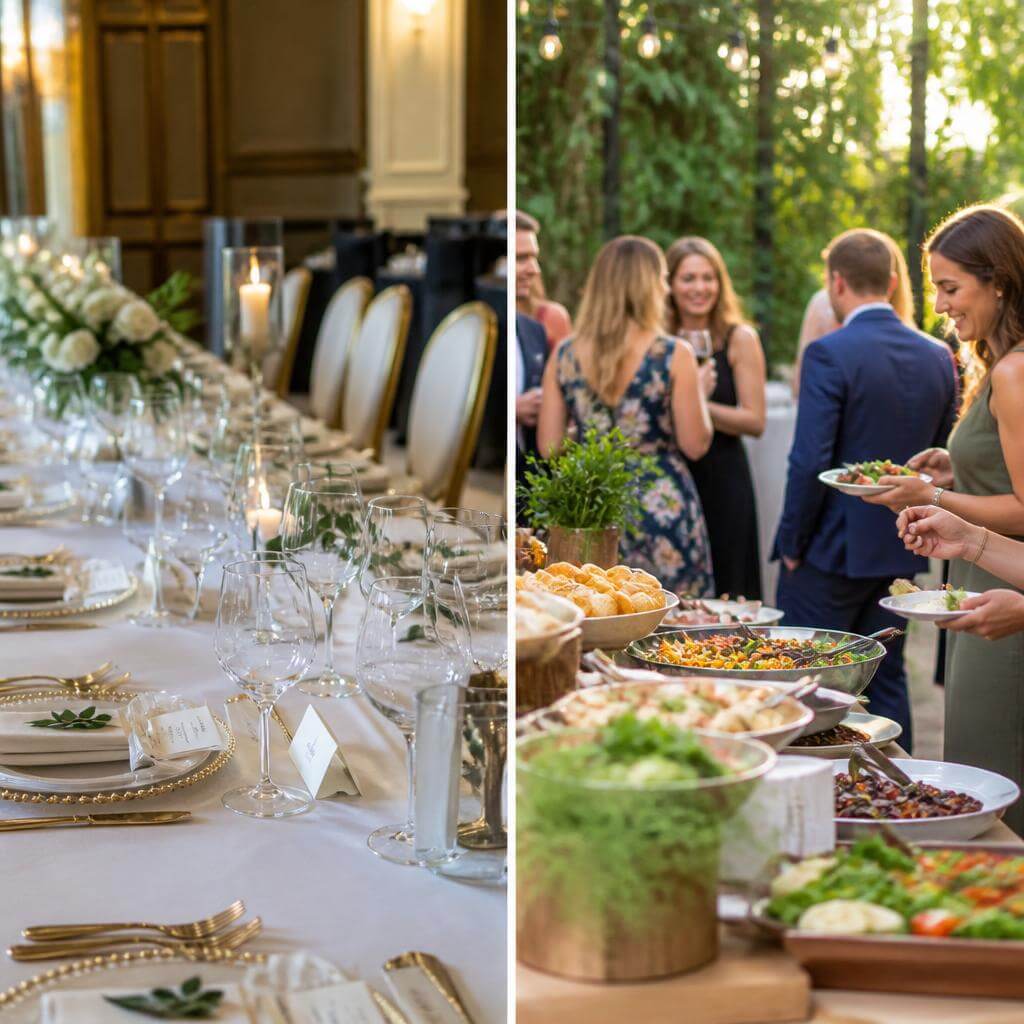
This is the first real decision, and it shapes everything downstream.
Why Assigned Seating Works Better for Most Weddings
For any reception with 50 or more guests or a plated dinner of any size, assigned seating is strongly recommended to prevent awkward scrambles and keep the catering team on track. Assigned seating also solves the family-politics problem before it becomes a live issue on the dance floor. You control who sits near whom, which means you control a huge chunk of the emotional temperature of the room.
Assigned seating also speeds up dinner service. When your caterer knows exactly how many entrees go to table 6, they can pre-plate and serve in a fraction of the time it takes to guess.
When Open Seating Actually Makes Sense
Open seating can work for smaller, casual weddings, usually under 50 guests, where most people already know each other. It also fits buffet-style or family-style receptions where guests naturally mingle and grab a plate whenever they’re ready. If your reception is a backyard barbecue for 40 close friends and family, you probably don’t need place cards.
The Hybrid Approach: Assigned Tables, Open Seats
A popular middle ground for 2026 weddings is assigning guests to a specific table but letting them choose their own seat once they get there. This keeps the room organized (your caterer still knows headcounts per table) while giving guests a little more freedom, especially useful for large families who want to sit together but squabble over exactly who sits next to whom.
The hybrid approach also saves you a step during the planning process itself. You skip the fine-tuned decision of exactly which chair each person sits in, a detail that rarely matters much once the reception is actually underway, and instead spend your time on the decision that does matter: which group of people sits together for three hours. For most couples, that’s a fair trade of effort for outcome.
Step-by-Step: How to Build Your Wedding Seating Chart From Scratch

Step 1: Get the Venue Floor Plan and Measurements
Ask your venue coordinator for the exact floor plan with dimensions as soon as the space is booked. You need to know the room’s usable square footage, where the dance floor, bar, and DJ booth will sit, and where the doors and service entrances are. This tells you how many tables actually fit, not just how many you’d like to fit.
Step 2: Choose Your Table Shape and Count
Once you know your guest count from RSVPs (or your estimated count if you’re still in early planning), divide it by your chosen table capacity to get your table count. A 150-guest wedding using 60-inch rounds at 8 per table needs about 19 tables. Round up, not down. It’s easier to leave one seat empty than to squeeze in a ninth chair.
Step 3: Group Your Guest List by Relationship and Compatibility
Pull your full guest list into groups: immediate family, extended family, wedding party, college friends, work friends, plus ones, and so on. This is the step most couples try to skip, and it’s the one that saves you the most time later. A clean grouping turns table assignment from a guessing game into simple matching.
Step 4: Seat the Head Table and VIP Tables First
Lock in the head table or sweetheart table, and the parents’ tables, before you touch anyone else. These are the anchor points of the room, both physically (usually closest to the dance floor) and socially. Everything else gets built around them.
Step 5: Place Each Group at a Table
Now work through your grouped list and slot each cluster into a table. Keep close friend groups intact. Don’t split couples. Watch table capacity as you go so you’re not left with a orphaned group of three that doesn’t fit anywhere.
Step 6: Review for Conflicts and Comfort
Read through the full chart looking for landmines: exes seated together, feuding relatives at the same table, or a guest who knows literally no one else at their table. Fix these before you move on. This is also the point to double check accessibility needs, seating anyone using a wheelchair or walker near a clear path to the restroom and exit.
Step 7: Build in Buffer Seats and an Overflow Table
A seating chart should be 90 to 95 percent complete three weeks before the wedding, with 1 to 2 empty buffer seats per table or one overflow table reserved for last-minute changes. Late RSVPs, forgotten plus ones, and last-minute cancellations happen at almost every wedding. Buffer seats keep you from having to rebuild your whole chart over one surprise guest.
Step 8: Lock the Chart and Share With Vendors
Send the finished chart to your caterer, venue coordinator, and day-of coordinator at least 2 to 3 weeks out. Your caterer specifically needs final table-by-table headcounts to order food and plan plating logistics.
| Step | What to Do | When |
|---|---|---|
| 1 | Get the venue floor plan with dimensions | As soon as venue is booked |
| 2 | Choose table shape and calculate how many tables you need | 3 to 4 months before |
| 3 | Group your guest list by relationship and compatibility | After RSVPs close |
| 4 | Seat the head table and VIP family tables first | Start of chart building |
| 5 | Place each guest group at the best-fit table | Working session with partner |
| 6 | Review for conflicts, proximity issues, and accessibility needs | After first draft |
| 7 | Add 1 to 2 buffer seats per table and one overflow table | Before finalizing |
| 8 | Share final chart with venue, caterer, and coordinator | 2 to 3 weeks before wedding |
Choosing Your Table Shape and How Many Guests Fit Per Table

Round Tables: Pros, Cons, and Capacity
Round tables are the reception standard because they let everyone at the table see and talk to each other easily, no one gets stuck at a far corner. A 150-guest wedding needs roughly the same seating logistics whether you’re in a major metro or a smaller city, though costs vary widely by location. The tradeoff is that round tables take up more floor space per guest than rectangular options.
Rectangular or Banquet Tables: Pros and Cons
Rectangular tables create a more communal, family-style feel and fit more people in less width, which matters in a tighter venue. The downside is that guests at opposite ends can’t easily hold a conversation, so they work best for groups who already know each other well, like the wedding party or immediate family.
Square Tables: When They Work
Square tables suit micro weddings and intimate dinners. They create a cozy, conversational setup for four, but they don’t scale well for larger receptions since you’d need a huge number of them to seat 100-plus guests.
How Much Space to Leave Between Tables
The ideal spacing between reception tables is at least 4 to 5 feet, which allows wait staff to move freely and guests to reach their seats without squeezing past each other. Tighter spacing looks fine in a floor plan mockup and feels cramped the moment 150 people and a serving cart are actually in the room.
Table shape also drives your decor plan. If you’re still deciding on centerpieces and linens, our guide to wedding table decoration ideas breaks down what works with each table shape.
| Table Shape | Seats Per Table | Best For | Notes |
|---|---|---|---|
| Round 48 inch | 4 to 6 guests | Intimate groupings | Good for elderly or small families |
| Round 60 inch | 8 guests | Standard reception table | Most common choice |
| Round 72 inch | 10 to 12 guests | Large friend or family groups | Harder to converse across |
| Rectangular 6 foot | 6 to 8 guests | Banquet or family-style | Creates long, connected feel |
| Rectangular 8 foot | 8 to 10 guests | Large groups or head table | Works well for wedding party |
| Square | 4 guests | Small intimate groups | Good for micro weddings |
| Spacing between tables | At least 4 to 5 feet | All venues | Allows waitstaff and guest movement |
Where to Seat the Head Table and Wedding Party

Traditional Head Table: Who Sits There
The classic head table seats the couple along with the wedding party and, sometimes, the wedding party’s dates. It’s a long rectangular table facing the room, usually placed on a small riser or closest to the dance floor so the couple has a clear sightline to their guests during toasts.
Sweetheart Table: Just the Two of You
A sweetheart table seats only the couple, a small two-top set apart from everyone else. It’s grown especially popular because it lets the couple have a quiet moment together and gives the wedding party a chance to sit with their own dates or families instead of being pulled away from them all night.
Family Table Alternative: Parents and Siblings
Some couples skip the traditional head table entirely and instead seat with their parents and siblings at one large family table. This works well when the wedding party is large and would otherwise take up a table that could seat close family.
Whichever setup you choose, deciding on it early makes the rest of the chart easier since it’s your anchor point. For more on organizing who stands up front and who sits where, check our full guide to a wedding party.
Where to Seat Every Type of Guest
Immediate Family and Grandparents
Seat parents, siblings, and grandparents close to the dance floor and the couple’s table. They’re often called on for toasts, first dances, or photos, and you want them within easy reach.
Wedding Party Members and Their Plus Ones
If you’re using a sweetheart table, seat the wedding party near the couple with their dates included. Splitting a wedding party member from their plus one for the whole reception is a common and easily avoidable mistake.
Friends Who Know Each Other Well
Keep established friend groups together. This is the easiest table to fill since they’ll entertain each other without any help from you.
Friends Who Do Not Know Anyone Else
This is the trickiest group. Mix them in with an outgoing, welcoming table rather than clustering every unconnected guest together at one table, which tends to feel isolating. A good host table with a couple of naturally social people goes a long way.
Work Colleagues and Acquaintances
Seat coworkers together unless you have a strong reason to mix them with mutual friends. Shared context makes for easier conversation among people who otherwise wouldn’t know much about each other.
Children and Young Guests
Group children together at a table near their parents, not a distant “kids’ table” across the room. If you have more than 6 to 8 kids attending, a dedicated kids’ table with activities can genuinely make the reception easier for both the kids and the adults.
Elderly Guests and Guests With Accessibility Needs
Seat older guests and anyone using mobility aids away from speakers and near the restroom and exits. A table close to a loud DJ setup makes conversation impossible and can be genuinely uncomfortable for guests with hearing aids.
Vendors: Photographer, DJ, and Coordinator
Vendors working through the reception need a seat and a meal, but they’re not guests in the social sense. Give them their own small table, usually near the back or a service area, and make sure their meals are included in your final catering count.
| Guest Type | Where to Seat Them | Why |
|---|---|---|
| Immediate family and parents | Closest to the dance floor and couple | Easy access for toasts and special dances |
| Grandparents and elderly guests | Away from speakers, near exits and restrooms | Comfort and accessibility |
| Wedding party members | Near the head table | Participation in toasts and dances |
| Close friend groups | Together at their own table | They know each other and will enjoy it |
| Friends who know no one | Mixed with friendly, outgoing guests | Prevents isolation |
| Work colleagues | Together unless mixed with mutual friends | Shared common ground |
| Children under 10 | Near parents but grouped together if many | Easier for parents to supervise |
| Single guests without plus ones | Spread across tables, not isolated together | Avoids the dreaded singles table feeling |
| Vendors | Their own vendor table with meals ordered | They need to eat but are not reception guests |
The Hardest Seating Situations and How to Handle Them
Divorced Parents Who Do Not Get Along
Divorced parents should generally be seated at separate tables, each positioned as a host of their own group of close family and friends, unless both parents have confirmed they are comfortable sitting together.Don’t assume proximity is fine just because “it’s been years.” Ask both parents directly ahead of time, and default to separate tables if there’s any hesitation on either side.
Single Guests Who Do Not Know Anyone
Spread single guests across a few tables with people who share their interests or sense of humor, rather than clustering them by relationship status alone. A single friend seated with three engaged couples they’ve never met is going to have a rough night. A single friend seated with two other outgoing guests they’ll actually click with is going to have a great one.
The “Singles Table” Debate: Why to Avoid It
Creating a singles table is widely considered a seating chart mistake, since it groups guests by what they lack rather than by shared interests or relationships. It also tends to feel obvious and a little awkward to the guests seated there, even when the intent is friendly.
Feuding Family Members
Put as much physical distance between them as your floor plan allows, ideally different tables on opposite sides of the room. If a real blowup is a genuine concern, give your day-of coordinator or a trusted family member a heads-up so they can step in quietly if needed. It also helps to seat each side of the feud near people who are naturally calm and unlikely to stir things up, rather than near guests who might egg on the tension for entertainment.
Last-Minute RSVPs and Unexpected Plus Ones
This is exactly what your buffer seats and overflow table are for. Add the guest to the nearest table with an open buffer seat rather than reshuffling your entire chart. If no buffer seat fits, your overflow table absorbs the overflow without disrupting anyone else’s assignment.
Guests Who Requested a Change After the Chart Was Finished
Set a firm cutoff, ideally two weeks before the wedding, after which changes only happen for genuine emergencies. Communicate that cutoff to close family so they’re not surprised when you say no to a last-minute swap request.
Tools to Build Your Seating Chart
The Index Card and Cork Board Method
The old-school method still works well for visual thinkers: write each guest or family group on an index card, then physically move cards between table groupings until it clicks. A large cork board set gives you a dedicated surface to pin up your table layout and rearrange cards as you go, which is especially useful for couples who think better with their hands than with a screen.
Spreadsheet Method: Simple but Rigid
A basic spreadsheet works for smaller weddings but gets clunky fast once you’re managing 100-plus names, dietary notes, and table numbers at the same time. It’s free and familiar, but every change means manually re-sorting rows.
Digital Seating Chart Apps: The 2026 Standard
Most wedding planning platforms now include a drag-and-drop seating chart builder that syncs with your RSVP list automatically. These tools update your headcounts live as guests respond, which saves a huge amount of manual cross-checking compared to a spreadsheet. Many also let you tag dietary restrictions and accessibility notes directly on each guest, so that information travels with the seating chart instead of living in a separate document your caterer has to cross-reference by hand.
The other advantage of a digital builder is speed of revision. Moving a guest from one table to another takes a drag and a drop instead of retyping a spreadsheet row, which matters a lot in the final two weeks when small changes tend to pile up quickly.
AI-Powered Seating Tools: What They Actually Do
More than half of couples, 54%, now use AI in some way to help plan their wedding, a jump of about 150% in a single year. For seating specifically, AI-assisted tools can suggest table groupings based on your guest relationships and flag potential conflicts, though most planners still recommend a human review pass before locking anything in, since AI won’t know that your cousin and your college roommate had a falling out last spring.
Keeping all of this organized, RSVPs, dietary restrictions, table notes, alongside your digital tool helps too. The Knot Ultimate Wedding Planner and Organizer is a practical physical companion to whatever digital app you’re using, with dedicated worksheets for guest list tracking that make it easy to jot notes mid-planning session without opening your laptop.
How to Display Your Seating Chart at the Venue
Seating Chart Display vs Escort Cards vs Place Cards
Escort cards, place cards, and seating chart displays serve different functions: escort cards guide guests to their table, place cards assign a specific seat, and a seating chart display shows all assignments at the venue entrance. You can use all three together for a formal plated dinner, or just one, an escort card table, for a more relaxed reception.
If you’re printing your own escort cards, Avery printable escort cards come in a pack of 50, work with standard home printers, and are easy to customize with guest names and table numbers the week before the wedding.
QR Code Seating: The 2026 Digital Option
A growing number of couples are adding a QR code guests can scan on their phone to search their own name and find their table, which cuts down on the crowd that usually forms around a single physical display sign right when everyone arrives at once. It’s a useful backup even if you’re also doing a printed display, since it gives guests a second way to find their seat if the physical sign gets crowded or someone arrives after the initial rush has cleared.
Alphabetical vs Table-by-Table Display
Alphabetical listings are faster for guests to scan since they’re looking for their own name, not a table number. Table-by-table displays work better for smaller weddings where guests already roughly know where their group is sitting, and they double as a nice keepsake design element if you’re printing them on a large calligraphed board rather than a simple list.
When to Set Up the Display and Who Manages It
Have your display set up and checked at least 30 minutes before guests are expected to arrive at the reception space. Assign this task to your coordinator or a member of the wedding party, not yourself, you’ll have enough going on.
When to Build Your Seating Chart: The Timeline
The Earliest You Should Start
Wedding planners recommend starting the seating chart framework as soon as the venue floor plan is confirmed, well before your RSVP deadline. You won’t have final numbers yet, but you can map out your table count and general zones for family, wedding party, and friends.
The Deadline That Most Couples Miss
The real work starts once RSVPs close, usually 4 to 6 weeks before the wedding. This is when your guest list becomes final and you can actually assign names to tables instead of guessing. Couples who wait until this point to even begin thinking about the chart tend to feel rushed.
When to Submit the Final Chart to the Venue
The final version should be completed 3 weeks before the wedding day, giving your caterer and venue enough lead time to finalize plating counts, print any needed materials, and prep the floor plan.
A Few Final Notes Before You Start
One thing worth saying plainly: no seating chart makes every single guest thrilled. Someone will end up one table further from the dance floor than they’d like, or seated next to a second cousin they only see once a decade. That’s normal, and it’s not a sign you did it wrong. Your job isn’t to make every seat perfect, it’s to make sure no one feels forgotten, no one gets stuck next to a person they genuinely can’t stand, and the room runs smoothly enough that your catering team can focus on food instead of logistics.
If you’re building this chart with a partner, block out one dedicated working session rather than trying to chip away at it over a few rushed minutes here and there. Print or pull up your full guest list, work through the grouping step together, and resist the urge to finalize table-by-table placement until you’ve both looked at the whole picture at once. Seating charts built in fragments tend to have more gaps and duplicate assignments than ones built in a single focused sitting.
Frequently Asked Questions
How do you make a wedding seating arrangement? Start with your venue’s floor plan and guest count to determine table shape and number, then group your finalized guest list by relationship and assign each group to a table, starting with the head table and family tables first. Review the full chart for conflicts before finalizing it 2 to 3 weeks before the wedding.
When should you start your wedding seating chart? Begin the general framework as soon as your venue floor plan is confirmed, then do the detailed name-by-name work once RSVPs close, usually 4 to 6 weeks before the wedding. Aim to have the chart fully locked 2 to 3 weeks out.
Do you need assigned seating at a wedding? Assigned seating is strongly recommended for any reception with 50 or more guests or any plated dinner, regardless of size. It keeps the room organized and helps your catering team serve efficiently. Smaller, casual receptions under 50 guests can work with open seating instead.
How many guests fit at a round wedding table? A standard 60-inch round table seats 8 guests comfortably and is the most common size used at U.S. weddings. Smaller 48-inch rounds fit 4 to 6, and larger 72-inch rounds can fit 10 to 12, though conversation gets harder across the wider table.
Where do divorced parents sit at a wedding? Divorced parents are typically seated at separate tables, each surrounded by their own close family and friends, unless both parents have explicitly said they’re comfortable sitting together. Always ask both sides directly rather than assuming.
Should you have a singles table at a wedding? No. Most wedding planners consider the singles table a seating chart mistake because it groups guests by what they lack rather than shared interests. Spread single guests across different tables with people they’re likely to genuinely enjoy talking to.
What is the difference between escort cards and place cards? Escort cards direct guests to their assigned table and are typically picked up at the reception entrance. Place cards assign a specific seat at that table. You can use one or both depending on how formal your reception is.
Where does the wedding party sit during the reception? The wedding party typically sits at a traditional head table alongside the couple, often with their dates included, or at tables near a sweetheart table if the couple chooses to sit alone. The exact setup depends on wedding party size and the couple’s preference.
How do you handle last-minute RSVP changes in your seating chart? Build 1 to 2 buffer seats into each table, or reserve one overflow table, specifically for late RSVPs, forgotten plus ones, or last-minute cancellations. This lets you absorb small changes without rebuilding the entire chart.
What is a sweetheart table? A sweetheart table is a small table, usually a two-top, reserved just for the couple during the reception. It gives the couple a quiet moment together and frees up the wedding party to sit with their own dates or families.
How far in advance should you give the seating chart to your venue? Share your final seating chart with your venue, caterer, and coordinator at least 2 to 3 weeks before the wedding so they have time to finalize plating counts and prep logistics.
What is the best free tool for making a wedding seating chart? Most wedding planning platforms include a free drag-and-drop seating chart builder that syncs directly with your RSVP list, which is generally faster and less error-prone than a manual spreadsheet for weddings over 50 guests.
Related Reading
Common Seating Chart Mistakes
| Mistake | Better Approach |
|---|---|
| Starting too late after RSVPs close | Begin the framework before RSVPs are fully in |
| Seating divorced parents at the same table | Give each their own table with close family around them |
| Creating a singles table | Distribute single guests across tables with compatible groups |
| Forgetting buffer seats | Leave 1 to 2 empty seats per table or one full overflow table |
| Not sharing the chart with the caterer early | Submit final chart at least 2 weeks before for plated meal service |
| Seating elderly guests near loud speakers | Keep older guests at the far end from the DJ or band |
| Forgetting vendor meals and seats | Always include the photographer, DJ, and coordinator in your count |
| Building the chart in a tool that is hard to edit | Use a drag-and-drop tool so changes take seconds not hours |
A wedding seating chart is one of the last big logistics puzzles before your wedding day, but it doesn’t have to eat your whole week. Start the framework early, group your guests honestly, and build in buffer room for the surprises that always show up. Get those three things right and the rest of the chart falls into place fast, and you’ll spend the actual wedding day enjoying the room you built instead of worrying about who’s sitting where.

About The Author


Leave a Reply