
Quick Answer
Wedding flowers in the US cost an average of $2,723, according to The Knot’s 2025 Real Weddings Study. Florals typically take up 8 to 15 percent of a couple’s total wedding budget. The three fastest ways to cut costs: pick flowers that are in season during your wedding month (which drops per-stem prices by 20 to 40 percent), move ceremony arrangements to the reception instead of ordering a whole separate set, and go heavy on greenery so you need fewer actual blooms. Couples who DIY their centerpieces and simpler pieces save 40 to 60 percent compared to hiring a florist for everything. A realistic floral budget for 50 guests starts around $1,000 on the low end and climbs to $8,000 for a fully styled look.
What Wedding Flowers Actually Cost in 2026
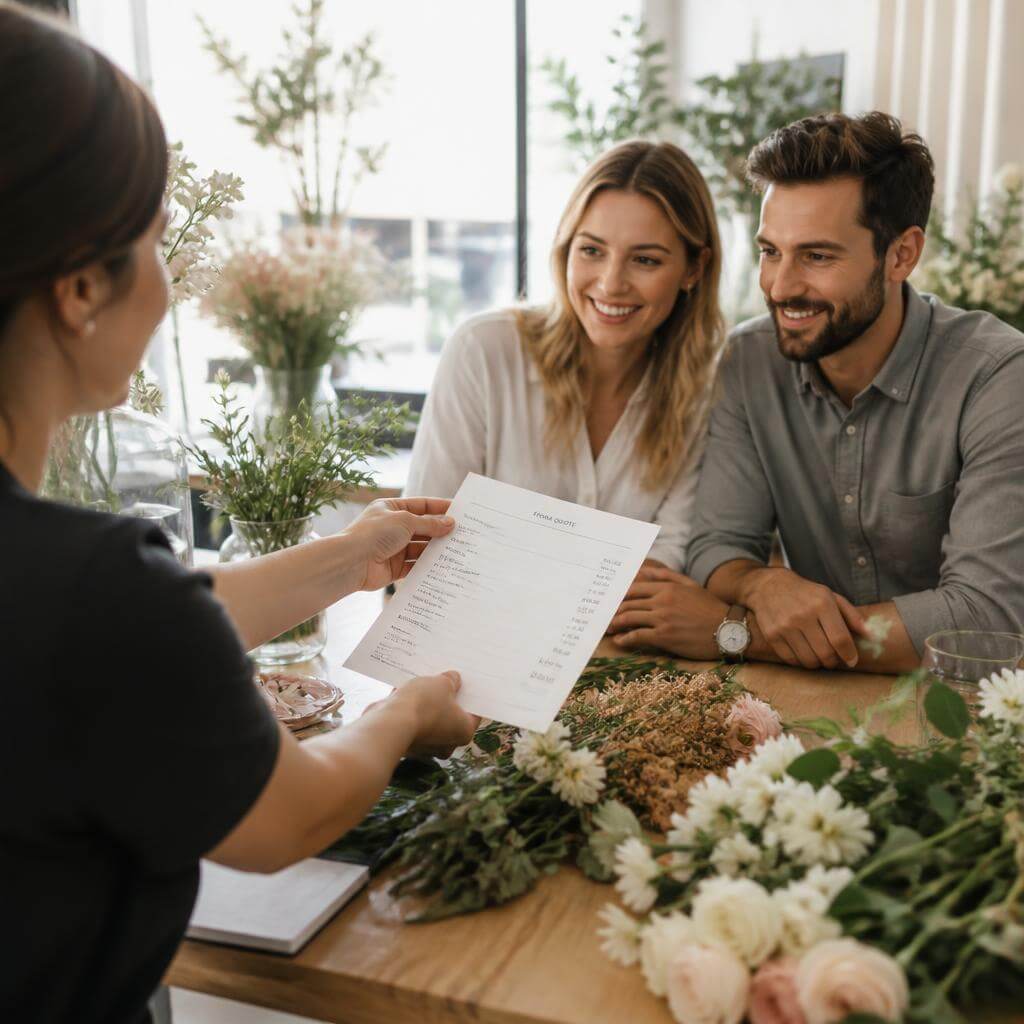
Too many couples walk into a florist consultation with no idea what things cost and walk out in shock. So let’s start with real numbers.
According to The Knot’s 2025 Real Weddings Study, the average cost of wedding flowers in the US was $2,723 in 2024. That number sits in the middle of a very wide range. Some couples spend $800. Others spend $15,000. Where you land depends on your guest count, your venue size, how many floral moments you want (arch, aisle, tables, cocktail hour, cake), and the specific flowers you choose.
Industry sources track these numbers every year, and they keep pointing to the same range: most couples spend somewhere between $1,500 and $5,000, depending on location, season, and floral priorities.
One thing worth knowing before you even start talking to florists: your venue affects how much you need to spend on flowers. A lush garden venue basically decorates itself. A plain white ballroom needs a lot of help. This is one reason how to choose a wedding venue should be worked out before you lock in any flower budget.
Average Cost Breakdown by Floral Item
Here is what each floral element typically costs, broken into three tiers: budget, mid-range, and splurge.
| Floral Item | Budget | Mid-Range | Splurge |
|---|---|---|---|
| Bridal bouquet | $150–$250 | $250–$450 | $450–$800 |
| Bridesmaid bouquets (each) | $50–$80 | $80–$150 | $150–$250 |
| Boutonnieres (each) | $15–$25 | $25–$45 | $45–$80 |
| Ceremony arch | $300–$500 | $500–$1,000 | $1,000–$3,000 |
| Guest table centerpiece | $75–$150 | $150–$350 | $350–$800 |
| Total (50 guests) | $1,000–$2,000 | $2,000–$4,000 | $4,000–$8,000 |
The bridal bouquet is usually where couples overspend first. A florist’s time, skill, and materials all go into that one piece, and it gets photographed from every angle all day. That said, a $250 bouquet made with in-season flowers and good greenery can look just as stunning as a $600 one.
A few other costs that catch couples off guard: delivery and setup fees (often $150 to $400 depending on the florist and how far they have to travel), breakdown and cleanup fees if the florist stays to retrieve their vessels, and travel surcharges for venues outside a certain radius. Always ask for an itemized quote. Some florists roll these into one number; others tack them on at the end. You want to know which before you sign.
What Percentage of Your Budget Should Go to Flowers
Wedding florals typically take up 8 to 15 percent of a couple’s total budget. On a $25,000 wedding, that’s $2,000 to $3,750. On a $15,000 wedding, you’re looking at $1,200 to $2,250.
These are guidelines, not rules. Couples who love a lush, garden-style look sometimes push flowers to 20 percent. Couples who lean on candles and greenery keep it under 5 percent.
The key is figuring out what matters most to you before you sit down with a florist. Know your total budget. Know your priorities. If flowers are important to you, pull from something else. If they’re not, say so upfront. A good florist will respect that.
Choose In-Season Flowers and Cut Costs by Up to 40 Percent

This is the single highest-impact change you can make. Picking in-season flowers can cut your floral costs by 20 to 40 percent compared to out-of-season blooms. When flowers are in season locally, supply is high and shipping costs are low. Out-of-season flowers are often flown in from South America or Europe, and that adds cost at every step.
What Flowers Are in Season by Month
| Season | Budget-Friendly Flowers | Avg Cost Per Stem | Flowers to Avoid |
|---|---|---|---|
| Spring | Tulips, daffodils, peonies | $1–$3 | Orchids, gardenias |
| Summer | Sunflowers, dahlias, zinnias | $1–$2 | Lily of the valley |
| Fall | Marigolds, chrysanthemums, cosmos | $1–$2 | Peonies, ranunculus |
| Winter | Amaryllis, holly, evergreen | $2–$4 | Most fresh blooms |
Spring and summer give you the most budget-friendly options because more flowers are in bloom and local growers actually have inventory. Winter weddings face higher per-stem prices across the board since most of the fresh supply has to be shipped in.
The Cheapest Wedding Flowers That Still Look Stunning

These flowers give you the most visual bang for your buck:
Baby’s breath. Once considered dated, it has fully come back, in both minimalist and maximalist arrangements. It fills space beautifully and costs $0.50 to $1.50 per stem.
Carnations. Modern carnations in dusty rose, terracotta, and white are having a real design moment right now. They cost $0.50 to $1.50 per stem and hold up for days without wilting.
Sunflowers. At $1 to $2 per stem, sunflowers can fill a centerpiece without emptying your wallet. They work great for summer and fall weddings.
Chrysanthemums. Available in dozens of shapes and colors, chrysanthemums are workhorses. They bulk up arrangements, hold their shape, and cost $1 to $2 per stem.
Zinnias. Bright, cheerful, and in season from midsummer through fall. They come in nearly every color and run about $1 per stem from farm-direct sellers.
Eucalyptus and greenery. Not a flower, but essential. Greenery-heavy arrangements cost around 30 percent less than flower-heavy ones because you’re replacing pricey blooms with foliage. A lush eucalyptus runner with clusters of white spray roses looks both beautiful and intentional, and your florist can pull it off at a fraction of the cost of an all-flower design.
Flowers to Avoid If You’re on a Tight Budget
Garden roses. Gorgeous and photogenic, but $4 to $8 per stem. One bridal bouquet made entirely of garden roses can cost $200 in flowers alone before any labor.
Peonies. Beloved, fleeting, and expensive outside their May to June peak. Out-of-season peonies run $8 to $12 per stem.
Lily of the valley. Delicate, fragrant, and genuinely one of the most expensive flowers you can use. Often $5 to $8 per stem.
Orchids. Striking in portraits, but costly, and not great for outdoor summer weddings where they can look wilted by cocktail hour.
Gardenias. Beautiful scent, terrible value. They bruise easily, have a short vase life, and cost $5 to $9 each.
If you love one of these flowers, ask your florist to use it only in your bridal bouquet as a focal flower and swap it out for cheaper alternatives everywhere else.
Smart Ways to Work With Your Florist on a Budget

Most florists have worked with budget-conscious couples plenty of times. They’re not offended by honest budget conversations. They actually prefer them because it saves everyone time.
How to Have the Budget Conversation Without Awkwardness
Lead with your total number, not a range. Saying “we have $2,000 for florals” is more useful to a florist than “we’re trying to keep costs down.” Give them a real number to design around.
Tell them your priorities. If the bridal bouquet and ceremony arch matter most and the centerpieces can be simple, say that. A good florist will put the budget where it counts and find creative solutions for the rest.
Ask to see examples in your price range. Most florists have portfolio shots across different budgets and can show you what a $150 versus a $400 centerpiece actually looks like in real life.
Ask About Repurposing Ceremony Flowers at the Reception
This one move saves couples $200 to $800 on average. Instead of buying separate flowers for both the ceremony and reception, you use the same arrangements in both spaces.
Ceremony aisle markers become cocktail hour décor. Large altar arrangements move to flank the sweetheart table or the bar. Arch flowers get broken down into clusters on guest tables after the ceremony ends.
Talk to your florist about logistics. They usually handle the move-over, but you can also designate a family member to supervise. The flowers just need to be in water-filled vessels to stay fresh for the second use.
Choose Greenery-Heavy Arrangements to Cut Flower Count
Greenery-heavy arrangements cost around 30 percent less than flower-heavy ones. Eucalyptus, ferns, olive branches, and Italian ruscus add texture, volume, and a really lush look without the cost of extra blooms.
A centerpiece that’s 70 percent greenery with 30 percent white spray roses looks full, modern, and intentional. The same centerpiece made entirely of roses costs a lot more and often photographs almost identically.
Skip Flowers Where Guests Won’t Notice
Be strategic about where you drop flowers entirely.
Cocktail tables. A cluster of pillar candles and a few sprigs of eucalyptus on a high cocktail table looks just as good as a full floral arrangement.
Bathrooms. Some florists offer small bud vases for restrooms. Skip this.
Cake flowers. Fresh flowers on a wedding cake look beautiful but they’re expensive. Most bakeries can pipe sugar flowers or use edible alternatives for a fraction of the cost.
Pew markers. If your ceremony venue has good architectural interest on its own, plain ribbon bows on pew ends cost almost nothing and look clean and classic.
Guest book and escort card tables. A simple candle or a few gathered stems in a bud vase does the job here. No need for anything elaborate.
DIY Wedding Flowers: What’s Actually Worth Doing Yourself
DIY wedding flowers can save 40 to 60 percent compared to hiring a florist for everything. The catch is it takes real time, some skill, and ideally a good support team. Being realistic about what you can pull off in the days before your wedding is the difference between a win and a total disaster.
What You Can Realistically DIY and What You Can’t
Good candidates for DIY:
- Guest table centerpieces (especially low, simple designs)
- Cocktail hour bud vases
- Aisle markers and chair decorations
- Ceremony table arrangements
- Flower crowns (with practice)
Leave these to the professionals:
- Your bridal bouquet (it’s photographed all day and handled constantly)
- The ceremony arch or backdrop (structural installation is more complex than it looks)
- Corsages and boutonnieres (tiny mechanics, specific techniques)
- Large reception statement pieces
The general rule: DIY the background arrangements that fill a room and hire a florist for the pieces that’ll be in every photo.
Where to Buy Wholesale Flowers
You don’t need a florist license to buy wholesale flowers. Here are the best sources:
Blooms By The Box sells farm-direct wholesale flowers in bunches, including pre-planned wedding recipes that walk you through what to order. Genuinely helpful for first-timers.
Sam’s Club and Costco carry large bunches of roses, tulips, and mixed flowers for significantly less per stem than a regular florist. Great for bulk centerpiece flowers.
Local farmers markets often sell cut flowers from regional growers below wholesale. Check what’s available the weekend before your wedding.
FiftyFlowers and Global Rose are online farm-direct sellers that ship fresh flowers two to three days before your event.
Order 10 to 15 percent more flowers than you think you need to cover breakage, stems that don’t open properly, and the extras you’ll inevitably want.
Tools and Supplies You Need for DIY Arrangements
Don’t start conditioning flowers without the right materials. Here’s what you need:
- Floral shears (not regular scissors, which crush stems)
- Floral tape, floral wire, and waterproof stem wrap
- Flower food packets
- Clean buckets for hydrating flowers
- Floral foam for centerpieces
- Zip ties or twist ties for bundling stems
- Ribbon for bouquets
Give yourself a full day to condition flowers (trim stems, strip leaves, hydrate in clean water) before you start arranging. Flowers need at least 6 to 8 hours to properly drink before they’re workable.
A Realistic DIY Weekend Timeline
If your wedding is on a Saturday, here’s how most successful DIY flower projects break down. Order flowers for delivery on Wednesday or Thursday. Spend Wednesday evening conditioning: unpack everything, cut one to two inches off each stem at a diagonal under running water, strip any leaves that would sit below the waterline, and put everything in clean buckets with flower food. On Thursday, check water levels and let flowers continue opening in a cool, dark room. Friday is your arranging day.
Do not try to arrange flowers the morning of your wedding. Even experienced florists don’t attempt that.
Set up your workspace before your flowers arrive. A large folding table covered in plastic sheeting works perfectly. Keep your tools within reach, have a trash bag for clippings, and keep a spray bottle of water nearby to mist petals as you work.
DIY vs. Professional Florist: Quick Comparison
| Factor | DIY | Professional Florist |
|---|---|---|
| Cost | 40–60% cheaper | Full market rate |
| Time required | 10–20+ hours | Minimal for couple |
| Stress level | High in wedding week | Low |
| Quality control | Variable | Consistent |
| Best for | Centerpieces, simple bouquets | Arch, bridal bouquet |
Floroom Artificial Ivory Foam Roses with Stems (25-Pack)
If you’re going DIY but want something that looks polished and holds up all day, these foam roses are worth keeping in your toolkit. They have bendable stems and realistic petal texture, and a lot of DIYers use them for bridal party bouquets or backup pieces that need to last hours without water. The ivory tone works well with both warm and cool color palettes.
Consider Artificial Flowers for Certain Arrangements

Artificial flowers are nothing like the stiff plastic arrangements from twenty years ago. High-quality silk and foam flowers have come a long way, and when used in the right spots, they’re genuinely hard to tell apart from fresh in photos.
Where Artificial Flowers Work and Where They Don’t
Where they work well:
- Arch and backdrop installations (no wilting, stays perfect even in heat)
- Flower walls and photo backdrops
- Boutonnieres (they get handled constantly, sometimes stepped on)
- Cake flowers (no concerns about food-safe stems)
- Hair flowers and flower crowns (worn for hours, often in heat)
- Keepsake bouquets the couple wants to preserve
Where they struggle:
- Up-close photography in natural light (the texture reads differently)
- Fragrant moments like the ceremony entrance or dinner tables
- Organic, wild-garden aesthetics where real imperfection is the point
- Anything that will be smelled or handled closely by guests
The smartest approach is mixing artificial with fresh. Use silk or foam for large-scale installs and background pieces, and use fresh flowers for your bouquet and anything that’ll be photographed up close.
How to Make Artificial Flowers Look Real
The biggest giveaways for artificial flowers are uniform coloring, perfect symmetry, and plastic sheen. Here’s how to fix all three.
Bend the stems. Real flowers don’t grow perfectly straight. Curve the stems slightly so arrangements look natural and organic.
Mix in real greenery. Fresh eucalyptus or ferns layered with silk roses adds natural texture and scent that reads as fresh.
Choose flowers with color gradients. Look for artificial flowers that shade from center to petal edge, the way real blooms do. Flat, single-tone petals look obviously fake.
Use matte-finish flowers. Any shine instantly reads as plastic. Look for flowers with a slightly textured, matte petal surface.
Vary stem lengths. Cut stems to different lengths before arranging. Uniform heights are the number-one sign of an artificial arrangement.
CEWOR Silk Bridal Bouquet: Champagne Roses, Hydrangeas, Eucalyptus
If you want a bridal bouquet that photographs beautifully, stays perfect all day, and costs a fraction of what fresh flowers run, this one is worth a look. It includes silk champagne roses, white hydrangeas, lavender, gypsophila, and eucalyptus leaves, and arrives ribbon-wrapped at a 7.5-inch diameter. The mix of textures is what makes it convincing. It’s not just roses.
Other Creative Ways to Cut Floral Costs
Flowers aren’t the only way to make a space feel romantic and lush. These alternatives have been trending for good reason, and they can save you hundreds.
Use Potted Plants Instead of Cut Flower Centerpieces
Potted plants cost 30 to 50 percent less than equivalent fresh centerpieces, and guests can take them home as favors, which wipes out the need for separate favor spending. Succulents, small ferns, herbs in terracotta pots, and seasonal plants all look great on tables. Add clusters of candles, ribbon, and small bud vases for texture. After the wedding, there’s no waste.
Candles and Non-Floral Centerpiece Ideas
A collection of pillar candles at varying heights creates a warm, genuinely romantic atmosphere without a single flower. Add a few sprigs of eucalyptus and some scattered rose petals and the table looks designed, not default.
Other non-floral centerpiece ideas that photograph beautifully:
- Lanterns with candles inside
- Clusters of glass bottles with dried grasses and pampas
- Books, photographs, and botanical prints for literary or vintage themes
- Sculptural fruit and vegetable centerpieces for fall or Italian villa aesthetics
- Terrarium-style glass vessels with moss and air plants
If your venue allows open flames, three to five pillar candles at varying heights on a mirrored tile or wooden slice is one of the most romantic and affordable centerpiece setups you can do. Loose eucalyptus or dried lavender around the base and the table looks genuinely styled. Many venues allow LED pillar candles as an alternative if real flames are restricted, and good-quality LED candles photograph convincingly.
Rent Floral Arrangements Instead of Buying
Some florists and event rental companies let you rent floral arrangements; you pay for use during your event rather than buying outright. This works especially well for large statement pieces like floor-standing arrangements that you only need for a few hours. Ask your florist if they offer this or know vendors who do.
Borrow Vases and Vessels From Your Florist
Vases, compotes, cylinders, and pedestals add up fast. A single glass cylinder can cost $15 to $40 at retail. If you have 20 tables, that’s $300 to $800 in vessels alone before a single flower is added.
Most florists either include vessels in their pricing or offer a rental program. Ask specifically: “Do your vessels come included in the quote, or are those separate?” Some florists charge vessel rental fees on top of flower costs, and couples often only find this out when reviewing the final invoice.
You can also source vessels cheaply by hitting thrift stores and estate sales over several months, then selling them after the wedding in a local buy-sell-trade group.
One more underused option: ask your venue’s event coordinator. Many venues have a collection of vases and décor from past events that couples left behind or donated. Some lend these to clients for free or a small fee. One email to ask and you might walk away with a cabinet full of cylinder vases at zero cost.
Questions to Ask Your Florist Before Signing Anything

The right questions can save you hundreds of dollars and prevent some serious misunderstandings. Go in prepared. Bring a notebook, a rough headcount and table count, and a small folder of inspiration photos. A photo says more than a color name ever will. “Dusty rose” means five different things to five different florists. A photo says exactly one thing.
Budget and Pricing Questions
“What’s included in this quote?” Get clarity on whether vessels, delivery, setup, breakdown, and travel fees are bundled in or itemized separately.
“How do you handle substitutions if a flower becomes unavailable?” Seasonal availability changes. A good florist has a clear substitution policy at equal or lesser cost.
“Is there a minimum spend to work with you?” Many florists have minimum contract values, often $2,000 to $3,000 or more. Know this before you fall for someone whose minimums are over your total budget.
“Do you offer payment plans?” Most florists require a deposit at signing (often 25 to 50 percent) with the balance due one to two weeks before the wedding.
“What happens to the flowers after the event?” You may be able to take arrangements home. Some florists donate leftover flowers to hospitals or hospice organizations, which is a meaningful option.
Substitution and Flexibility Questions
“Can we swap any flowers for less expensive alternatives?” Ask specifically about swapping garden roses for standard roses, or peonies for ranunculus.
“Can you use more greenery and fewer blooms to lower the cost?” This is almost always a yes, and it often produces a more lush, organic look anyway.
“Is it possible to simplify the bridal party flowers?” Single-stem boutonnieres instead of three-stem ones. Simple wrist corsages instead of full bouquets for grandmothers. Each simplification saves real money.
“Can we repurpose ceremony flowers at the reception, and will you coordinate that?” Confirm who moves the arrangements and whether there’s an additional labor fee.
“What’s the last date I can make changes to the order?” Most florists lock in final quantities two to four weeks before the wedding. Know the deadline so you have time to adjust.
“Have you worked at my venue before?” A florist who knows your venue understands the ceiling height, lighting conditions, loading dock situation, and any restrictions on candles or certain flowers. That practical familiarity saves time and can prevent expensive mistakes.
Also worth mentioning: if you haven’t sorted out your other wedding vendors yet, check out our guide on how to find a wedding photographer. Booking your photographer and your florist around the same time (9 to 12 months out) keeps your planning on track.
Frequently Asked Questions
How much should you spend on wedding flowers?
Wedding florals typically take up 8 to 15 percent of your total wedding budget. On a $20,000 wedding, that’s $1,600 to $3,000. The right number depends on how much flowers matter to you relative to other priorities like food, photography, and music. Set a firm cap before consulting florists, and make sure it covers everything: bridal bouquet, bridal party flowers, ceremony flowers, and reception centerpieces.
What is the cheapest flower for a wedding?
Carnations, baby’s breath, chrysanthemums, and zinnias are consistently among the least expensive options, often running $0.50 to $2 per stem. Carnations in particular have had a major style revival and regularly show up in high-end wedding designs. Spray roses are also a solid budget pick at $1 to $3 per stem and photograph beautifully. Sunflowers offer outstanding size and impact for $1 to $2 each in summer months.
How can I reduce my wedding flower costs?
The most effective moves: choose flowers that are in season during your wedding month (saving 20 to 40 percent per stem), use greenery-heavy designs that swap affordable foliage for expensive blooms, repurpose ceremony flowers at the reception (saving $200 to $800 on average), and DIY simpler pieces like centerpieces and bud vases. You can also rent large statement pieces instead of buying, and borrow vessels from your florist rather than purchasing your own.
Is it cheaper to do your own wedding flowers?
Yes, DIY wedding flowers can cost 40 to 60 percent less than hiring a professional florist. But the savings come with real trade-offs: significant time investment (10 to 20 or more hours), high stress in the week before your wedding, and variable quality depending on your skill level. DIY works best for centerpieces, bud vases, and simple arrangements. For your bridal bouquet, ceremony arch, and anything in close-up photography, most couples find a professional is worth the cost.
What flowers are in season for a spring wedding?
Spring weddings (March through May) have access to some of the most sought-after blooms: tulips, daffodils, peonies (late spring), ranunculus, anemones, lilacs, sweet peas, hyacinths, and cherry blossom branches. Most peak in April and May in the US, making late spring one of the best times for beautiful flowers at reasonable prices. Peonies are at their cheapest and most available in May and early June.
What flowers are in season for a fall wedding?
Fall weddings (September through November) have excellent access to dahlias, marigolds, chrysanthemums, cosmos, sunflowers (early fall), zinnias, amaranth, dried grasses, and pampas. Autumn foliage branches add dramatic texture and are often free if you have access to trees in fall color. Burgundy, rust, terracotta, and deep purple palettes are easy to achieve with in-season fall flowers at a low cost per stem.
Can you use artificial flowers for a wedding?
Yes, and high-quality artificial flowers are increasingly popular for the right elements. They work especially well for ceremony arches, flower walls, boutonnieres, hair flowers, cake flowers, and any arrangement that needs to hold up in heat or get handled frequently. For a more convincing look, mix artificial flowers with fresh greenery, vary stem heights, and choose options with color gradients rather than flat, uniform tones.
How far in advance should you book a wedding florist?
Most florists book 6 to 12 months in advance, especially for peak season dates (May through October). In major cities, popular florists can be booked out 12 to 18 months ahead. For a late spring or summer Saturday wedding, start reaching out 10 to 12 months before. Off-peak dates (weekdays, winter months, Sundays) give you more flexibility and sometimes more room to negotiate. Note that booking your florist happens at roughly the same planning stage as when to buy your wedding dress, typically 9 to 12 months out.
What wedding flowers are most expensive?
The most expensive wedding flowers are lily of the valley ($5 to $8 per stem), gardenias ($5 to $9 each), orchids ($4 to $10 per stem), garden roses ($4 to $8 per stem), and peonies when out of season ($8 to $12 per stem). If you love these flowers, ask your florist to use them only in your bridal bouquet as focal flowers and fill the rest of the arrangement with less expensive blooms and greenery.
How many flowers do you need for a wedding centerpiece?
A low, round centerpiece for a 60-inch round guest table typically uses 20 to 35 stems, depending on flower size and style. A tall statement centerpiece for the same table might use 40 to 60 stems. Greenery cuts that number down significantly. A greenery-heavy design with 10 to 15 focal flowers and abundant foliage can look just as full as a 30-stem all-flower arrangement. Multiply your per-centerpiece stem count by your total table count to estimate wholesale flower quantities if you’re going DIY.
What can I use instead of flowers for wedding décor?
Popular non-floral alternatives include pillar candle clusters, lanterns, potted plants (succulents, herbs, ferns), dried grasses and pampas, geometric terrariums, hanging macramé, paper flowers, botanical prints, vintage books, sculptural fruit, and seasonal foliage like olive branches or autumn leaves. Many couples mix a few fresh flowers with primarily non-floral elements to create a distinctive look that costs significantly less than a fully floral design.
Do wedding flowers need to match the bridesmaids’ dresses?
No, and in most modern wedding design they shouldn’t. The goal is for flowers and dresses to complement each other, not match. A dusty rose bridesmaid dress looks beautiful with bouquets in white, ivory, and eucalyptus with subtle blush accents. A sage green dress pairs naturally with white flowers and abundant greenery. Exact color matching can look stiff in photos; a complementary palette looks intentional and polished. Let your florist know your dress colors and ask them to suggest a palette that works alongside them.
For more wedding planning help, check out our guides on best man speech ideas and how to bustle a wedding dress.
About The Author


Leave a Reply