
Quick Answer
The most comfortable wedding shoes for wide feet combine a roomy toe box, genuine width sizing (not just a longer length), and a stable heel or flat base. Width labels matter: W or Wide means extra forefoot room, while EW or WW means significantly more space for swelling, bunions, or a naturally broader foot. The most adaptable styles are open-toe sandals, block heels, and mesh constructions, since mesh gently stretches with the foot throughout the day. Going up a half size adds some length but does not replicate the spatial difference of true width sizing. Brands including Naturalizer and Clarks are consistently mentioned by brides as performing well for wider and more sensitive feet. Adjustable ankle straps are worth prioritizing since they let you customize fit without relying on a single width measurement.
Understanding Wide Feet Before You Shop
Shopping for wedding shoes with wide feet is genuinely different from regular shoe shopping, and not just because the stakes feel higher. The problem is that most bridal shoe collections are designed around a narrow, aesthetic-first standard. Width options are an afterthought, if they exist at all. Before you can shop effectively, it helps to understand what your feet are actually doing and why standard sizing keeps failing you.
Width vs Length: Why They Are Different Problems
Shoe size measures the length of your foot from heel to the tip of your longest toe. Width is an entirely separate measurement, taken at the widest point of your foot, usually across the ball. These two numbers are independent. A person can have a size 8 foot in length and a D or W width at the same time. Sizing up to a 9 to gain more room in the forefoot adds length to the toe, which creates a different fit problem: the heel slips, the arch sits in the wrong position, and the shoe feels sloppy rather than comfortable.
This is why brides with wide feet often report that no matter how many pairs they try, nothing feels right. They are solving a width problem by adjusting length, and those are not the same dimension.
What Foot Fullness Actually Means
When people describe their feet as wide, they usually mean one of a few specific things. Their forefoot (the area across the toes and ball of the foot) is broader than a standard last. Their foot has a higher instep, meaning there is more volume from the top of the foot to the sole. Or their arch is lower, spreading the foot outward under body weight.
Each of these creates a different fit challenge. A high instep needs a shoe with more depth, not just more width. A very broad forefoot needs a wider toe box specifically. A foot that spreads under weight needs a shoe that can accommodate some movement without gripping so tightly it causes blisters.
Understanding which type of wideness you are dealing with helps narrow down which features to look for.
Signs Your Feet Are Genuinely Wide, Not Just Between Sizes
A few signs point clearly to genuine width, not just a borderline length issue. The sides of your foot press against the inner wall of the shoe before the length feels right. You get blisters on the sides of your toes rather than the tips or backs of your heels. Standard shoes feel fine at first but become painful within an hour or two as your feet settle into their natural shape. The shoe stretches noticeably after a few wears, usually across the forefoot. You have bunions, tailor’s bunions, or hammer toes, all of which indicate the foot is pushing against tight material.
If multiple of these sound familiar, width sizing is not optional for you. It is the only category worth shopping.
How Shoe Width Sizing Actually Works
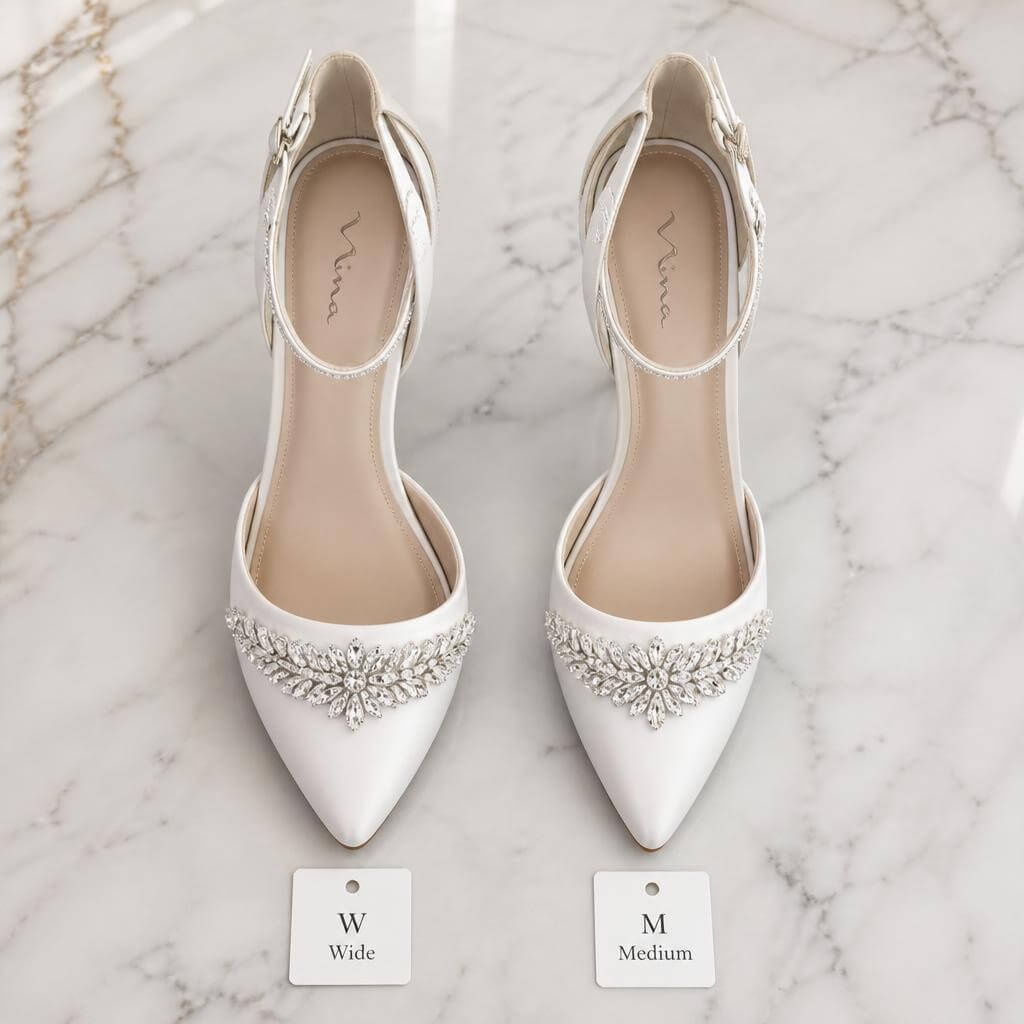
Most shoe shoppers have seen width letters on boxes without ever understanding what they mean. The system is consistent once you know how to read it.
Reading Width Labels: W, EW, WW
Width labels use a letter system. The baseline for most women’s shoes is a B (Medium). Going up from there, the sequence is D (Wide), E (Extra Wide), and EE or 2E (Extra Extra Wide), though manufacturers often simplify these on consumer labels.
In practical terms, here is how the labeling breaks down in real shopping:
| Width Label | What It Means | Best For |
|---|---|---|
| N or Narrow | Less than standard width | Naturally slim feet |
| M or Medium | Standard width | Average foot width |
| W or Wide | Extra room in the forefoot | Wider feet, mild bunions |
| EW or WW (Extra Wide) | Significantly more forefoot room | Wide feet, swelling, bunions |
| Mesh/Stretch (no letter) | Adapts to foot shape over time | Borderline width, comfort priority |
Shoe widths are commonly labeled with letters, where W or Wide indicates extra room and EW or WW indicates extra wide, offering even more space in the forefoot.
Bridal shoes sold without a width designation are almost always built on a medium or narrow last. When a brand does not advertise width options, assume the fit will be standard, and plan accordingly.
Why Sizing Up Half a Size Is Not Enough
Going up a half size creates some additional room but does not fully replicate the spatial difference of a genuinely wider-fit construction, which is why width sizing matters more than length adjustments alone.
The interior of a shoe is shaped by its last, which is the mold used during manufacturing. A narrow last produces a narrow interior regardless of how long it is. When you size up, you are getting a longer narrow last. The toe box shape, the width across the ball, and the depth at the instep all remain the same. The only thing that changes is the distance from heel to toe.
For mild width issues, a half size up can take enough pressure off the outer toes to feel meaningfully better. For genuinely wide feet, it rarely solves the problem and often creates new ones.
Why the Toe Box Is the Real Problem
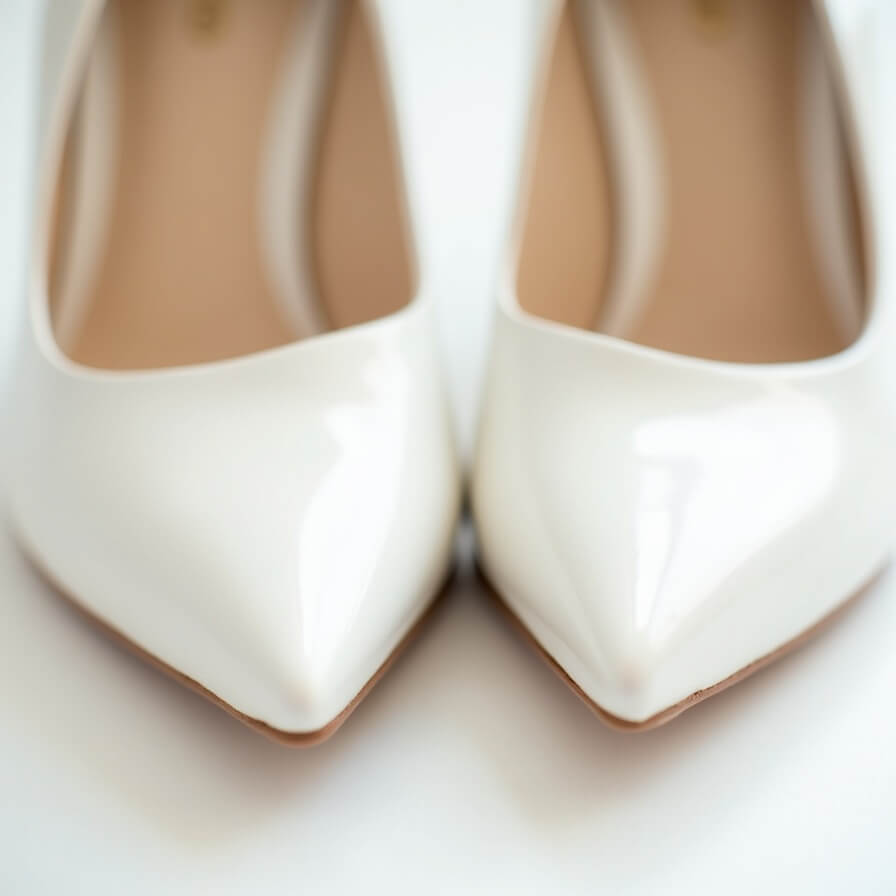
Ask any podiatrist or experienced shoe fitter where bridal shoe discomfort starts, and the answer is almost always the same.
The most common source of discomfort for brides with wider feet is the toe box, since pointed or narrow toe constructions compress the widest part of the foot and create pressure that intensifies over hours of wear.
How Pointed and Narrow Toe Boxes Cause Pain
A pointed toe box is designed to look long and sleek in photographs. It achieves this by tapering the shoe aggressively toward the tip. For a foot with a narrow forefoot, this can feel fine because the toes have room to sit together without touching the sides. For a wider foot, the toes are actively compressed as soon as the shoe is on. This compression is manageable for thirty minutes. Over eight hours of standing, walking, and dancing, it becomes severe.
The pressure does not just cause pain at the toes. It forces the gait to compensate, which shifts weight to other parts of the foot, creates friction at the heel and arch, and leads to the kind of full-foot exhaustion that has brides barefoot by the cocktail hour.
What a Genuinely Wide Toe Box Looks Like
A wide toe box is rounded or squared at the tip, giving each toe room to sit without touching its neighbors. From above, the front of the shoe mirrors the natural spread of the forefoot rather than tapering toward a point. This does not necessarily make a shoe look less elegant. Round and square toe silhouettes appear regularly in bridal collections and can look intentional and refined.
For practical purposes, when you are trying on a shoe, stand in it and notice whether your little toe or the side of your foot presses against the inner wall. If it does, the toe box is not wide enough, regardless of how the width label reads.
Why Pretty Photos Do Not Always Mean Comfort
Wedding shoe marketing is almost entirely aesthetic. The shoes are photographed on narrow lasts, on models with narrow feet, in controlled lighting designed to show the heel at its most elongated. These photographs tell you nothing about how a shoe will feel on a wider foot. This is why reviews from brides who share your foot shape are more useful than product images, and why brands that specifically manufacture in wide widths are worth prioritizing over brands that occasionally offer a wide option as a footnote.
The Best Wedding Shoe Styles for Wide Feet

Some shoe styles are structurally more forgiving for wider feet. These are not workarounds. They are genuinely better designs for the way a wider foot sits and moves.
Block Heels: The Most Forgiving Heel Shape
Block heels solve two problems at once. The wide, flat base distributes weight across the entire heel rather than concentrating it at a single small point. This means less pressure per square inch, less fatigue over time, and more stability on soft ground like grass, gravel, or uneven dance floors.
The height of a block heel still adds length to the visual line of the leg, which is part of why brides choose heels, but the platform distributes the physical load much more efficiently than a stiletto.
The DREAM PAIRS Chunky Block Heel Sandal is a solid example of this design done well. It has an open toe to relieve forefoot pressure, a 4.5mm latex footbed for all-day cushioning, and an adjustable ankle strap with seven holes so you can dial in a precise fit rather than accepting whatever a single snap position gives you. The slip-resistant outsole also helps on the surfaces you are most likely to encounter at a reception.
Open Toe and Peep Toe Styles
Open toe shoes remove the most problematic part of the construction for wide feet: the closed front. Without a toe box, there is nothing to press against the sides of the foot. The toes sit freely, the forefoot can spread naturally, and the shoe accommodates width variation that a closed toe simply cannot.
Peep toe styles are a middle ground. They reduce pressure at the front without fully exposing the foot, which can feel more formal. Both options are excellent choices for wide feet.
The trade-off is that open toe shoes provide less structure, so they work best when paired with other stability features: a firm heel counter at the back, a cushioned insole, or an adjustable ankle strap.
Mesh Construction and Why It Stretches With You
Mesh and open-toe constructions are considered the most adaptable styles for wider feet, since mesh gently stretches with wear to accommodate a broader forefoot without losing shape or security.
This is not a trick or a workaround. Mesh fabric is woven in a way that allows it to expand under pressure and return to its base shape when the pressure is removed. For a foot that spreads under weight during standing and walking, this means the shoe adjusts with you rather than fighting you.
Bridal-specific mesh styles exist from brands including Bella Belle, and the stretch quality tends to hold up through long wear. The visual effect is also often softer and more delicate than structured satin, which works beautifully for a wedding context.
Wedding Flats for Wide Feet
There is no rule that wedding shoes must have a heel. Flats are practical, especially for outdoor weddings, long ceremony walks, and receptions where dancing matters more than height. For wide feet, flats often fit better than heels because the foot lies flat on the insole rather than being angled forward, which concentrates pressure on the forefoot.
Wide-fit ballet flats and pointed mules have very different toe box shapes, and the difference matters enormously for wide feet. Look specifically for rounded or square toe ballet flats in W or EW widths. Brands including Naturalizer and Clarks both offer flat styles in wide widths, and both are well-reviewed by brides who have tried them.
Embellishment adds visual interest without adding height. Pearl trim, lace overlays, and beaded straps all make a flat feel genuinely bridal rather than casual.
Wedge Heels for Outdoor and Garden Weddings
Wedge heels are the practical winner for any wedding held on soft ground. A single heel contact point sinks into grass. A wedge distributes the contact across a longer base, so you are not sinking, tilting, or walking unevenly all day.
For wide feet, wedges are also forgiving because the platform can be built with more interior volume than a stiletto or kitten heel. More volume means more room for a wider foot to sit properly.
Look for wedges with cushioned footbeds and adjustable ankle straps. The ankle strap is particularly important outdoors since it keeps the shoe secure when the ground is uneven.
Best Heeled Sandals for Wide Feet

The heeled sandal is probably the best wedding shoe category for wide feet overall. It combines height with an open-toe design, adjustable straps, and visible construction that makes width variations much less of a problem than in a closed shoe.
What to Look for in a Wide-Friendly Sandal
The most important features in a heeled sandal for wide feet are, in order: an open or rounded toe area with no compression; adjustable straps rather than fixed elastic; a cushioned insole or footbed that supports the arch; and a stable heel shape (block or wedge preferred).
Avoid heeled sandals where the only adjustment is a single buckle at the ankle. If the forefoot straps are fixed width, they will fit either well or not at all, and you will have no way to know until the shoe is on.
The Naturalizer Bristol Heeled Sandal is a consistently well-reviewed option. It uses Naturalizer’s Contour+ technology, which combines plush cushioning with targeted support that gently conforms to the shape of the foot. The open toe construction removes forefoot pressure, and the adjustable buckle closure allows for a truly customized fit rather than a fixed width that either works or does not. Naturalizer is one of the brands most frequently cited by brides with wider and more sensitive feet as actually delivering on its comfort claims.
Adjustable Straps Matter More Than People Realize
A shoe with adjustable straps is not just a convenience feature. It is a structural advantage for wide feet. Here is why.
Width sizing in heeled sandals is less standardized than in closed shoes. A sandal marked W may have a wider platform but a forefoot strap that is still fixed at a standard width. An adjustable buckle lets you account for that discrepancy by loosening the strap until it sits comfortably rather than digging in.
Adjustable straps also help with the swelling that happens during long events. Feet swell meaningfully over the course of eight or more hours of wearing shoes, standing, and dancing. A fixed-width shoe that fits in the morning may feel tight by late afternoon. An adjustable strap lets you loosen by one or two holes without changing shoes.
Wedding Shoes for Specific Foot Concerns
Wider feet often come with accompanying foot concerns, and each concern has different requirements.
Shoes for Bunions
A bunion is a bony protrusion at the joint of the big toe. It forms when the big toe pushes toward the second toe over time, often made worse by narrow footwear. For a wedding, the goal is to choose a shoe that does not press against the bunion at all.
The practical requirement is a wide toe box with no seam or strap across the bunion area. Open-toe designs are usually the safest because there is nothing to press against the joint. Slingback styles are worth considering since the forefoot is open while the heel is secured by a strap.
Sole Bliss is a specialty brand that makes shoes specifically for bunion-prone feet, offering up to three sizes more volume in the forefoot than a standard shoe. Bella Belle also makes bridal-specific styles in wider fits that have been used by brides with bunions.
Shoes for Plantar Fasciitis
Plantar fasciitis involves inflammation of the tissue connecting the heel to the toes. The most common trigger is a shoe with inadequate arch support or a heel height that puts excessive strain on the fascia.
For a wedding shoe, the best choices are block heels with genuine cushioning and arch support built in. Flat shoes can work if they include an insole with good arch support, though many bridal flats have minimal cushioning by default. A moderate heel of one to two inches actually reduces plantar fascia strain compared to a flat because it slightly shortens the distance the fascia needs to stretch. Very high heels shift too much weight forward and create a different problem.
Removable insoles are helpful because they allow you to swap in a custom orthotic or a high-quality aftermarket insole.
Shoes for Swelling and All-Day Wear
Feet swell throughout the day, and they swell more at events involving long periods of standing, dancing, and warm reception venues. For brides who already have wide feet, swelling can make a shoe that fit well at 10am feel genuinely painful by 8pm.
The best approach is to shop for shoes in the afternoon or evening when your feet are at their largest. Adjustable strap sandals are the best style choice because you can loosen them as your feet expand. Mesh styles also accommodate swelling better than structured leather or satin.
| Foot Concern | Best Shoe Style | Why It Helps |
|---|---|---|
| Bunions | Open toe or wide toe box flats | Avoids pressure on the joint |
| Plantar fasciitis | Block heel with arch support | Distributes weight, supports arch |
| Swelling | Adjustable strap sandals or mesh | Accommodates size changes through the day |
| General wide feet | Mesh block heel or wide flat | Stretches to fit without pinching |
| Sensitive forefoot | Cushioned insole plus wide width shoe | Reduces pressure points directly |
Brands Known for Wide-Friendly Wedding Shoes
The difference between a brand that offers a wide option and a brand genuinely committed to wide-fit construction is significant. Some brands retool their lasts for wide versions. Others simply use the standard last and size up. The outcome feels completely different on a wider foot.
Mainstream Brands With Genuine Width Options
Naturalizer has built its reputation on genuine comfort for a range of foot shapes. Their Contour+ technology is real cushioning, not just a marketing label, and their wide width options are made on a different last rather than just upsized. They are widely available and have strong reviews from the wide-foot community.
Clarks is another mainstream brand with consistent wide-width options and strong comfort feedback. Their wide options are particularly well regarded for everyday wear, which translates well to the all-day demands of a wedding. Both Naturalizer and Clarks appear consistently in genuine brides’ reviews of wide-fit wedding shoes that actually worked.
Specialty Wide-Fit Bridal Brands
Sole Bliss is a UK-based brand that makes shoes exclusively for wider feet and feet with bunions. Their sizing claims up to three additional sizes of forefoot volume compared to a standard shoe. They have bridal styles that would work for weddings, and their designs skew toward the elegant end of the spectrum rather than orthopedic-looking.
Bella Belle is a bridal-specific brand known for delicate mesh and fabric styles. Their mesh designs stretch to accommodate broader forefeet and have been used successfully by brides who could not find other bridal shoes that fit.
DREAM PAIRS offers affordable block heels with wide-width filters on their website. Quality is budget-appropriate, but for brides who need a backup pair or a reception flat to change into, they represent solid value.
| Brand | Width Options | Known For |
|---|---|---|
| Naturalizer | Wide, X-Wide available | Contour+ cushioning technology |
| Clarks | Wide options on select styles | Consistent comfort feedback from wide-foot wearers |
| Sole Bliss | Up to 3 sizes more volume | Specialty wide and bunion-friendly bridal shoes |
| Bella Belle | Mesh styles that stretch | Bridal-specific wide fit collection |
| DREAM PAIRS | Wide width filter available | Affordable block heel options |
How Many Hours You Will Actually Be on Your Feet
Brides consistently underestimate how long they spend in their shoes on a wedding day. This is not a minor detail. It is central to understanding why shoe choice matters as much as it does.
To get the full picture of your day’s timeline, it helps to read about how long is a wedding from start to finish before making any decisions about footwear.
Ceremony, Photos, Reception, and Dancing Add Up
A typical wedding day begins with getting dressed, often two to three hours before the ceremony. The ceremony itself runs thirty minutes to an hour for most formats. Then come formal photos, which can last two hours or more depending on the size of the wedding party. The reception typically runs four to six hours, including cocktail hour, dinner, toasts, and dancing.
In total, most brides spend eight hours or more in their wedding shoes. That is a full workday on your feet, often with less opportunity to sit than you would at any desk job.
Why This Matters More Than Most Brides Expect
Shoe shopping in the afternoon, after fifteen minutes of walking around a store, gives you almost no information about how a shoe will feel after eight hours. A shoe that feels pleasant in the store may cause blisters after hour three or swelling-induced pain by hour six.
This is why comfort features that seem excessive for a quick try-on become essential under real conditions. Cushioned footbeds, adjustable straps, wide toe boxes, and stable heel shapes are not luxuries for a long wedding day. They are the baseline for getting through it without spending the last hours of your reception sitting in a corner with your shoes off.
How to Make Any Wedding Shoe More Comfortable
Sometimes you fall in love with a pair of shoes that are almost right. They fit the width requirements but lack cushioning. Or they have the right toe box but a thin insole. There are practical ways to improve shoes that are close to working.
Adding Cushioning and Arch Support
Self-adhesive gel insoles are the most effective single upgrade for any heel or sandal that is comfortable in terms of width but inadequate in terms of cushioning.
The Unribeau 3/4 High Heel Gel Cushion Insoles are designed specifically for this use case. They add cushioning and arch support inside any heel, sandal, or flat, with a self-adhesive backing that keeps them in place throughout long wear. They are trimmable to fit and reusable, which makes them useful beyond the wedding day. For wider feet, where the forefoot often bears more pressure than average, the additional forefoot cushioning these provide can meaningfully extend comfort time.
Breaking In Mesh and Stretch Materials Before the Day
Mesh and fabric shoes stretch with wear, which is one of their advantages. But they stretch most in the first few wears as the material conforms to your specific foot shape. If you put on a pair of new mesh shoes on your wedding day, you are breaking them in at the worst possible time.
Wear your wedding shoes around the house for an hour at a time, several times before the wedding. Wear them with the same hosiery or no socks that you plan to wear on the day. This gives the material time to stretch to your foot and lets you identify any pressure points while you still have time to address them.
Bringing a Backup Pair for the Reception
Having a second pair of shoes ready for the reception is one of the most practical decisions a bride with wide feet can make. The ceremony and photos are often the parts of the day with the most formality requirements for shoes. By the time the reception begins, most brides are ready to prioritize comfort over aesthetics.
A wide-fit ballet flat or a cushioned sandal in a neutral color is ideal as a backup. Pack it in a tote bag or have a family member hold onto it. The moment you switch is the moment your wedding day gets significantly more enjoyable.
Speaking of the bag you bring: a good emergency kit for a wedding should always include blister plasters and foot cushion pads as standard items. They are the backup plan for your backup plan.
How Shoe Height Affects Your Dress Hem
Before finalizing your shoe height, it is worth coordinating with your dress hem and bustle. The height of your heel changes where the hem falls. A dress altered to the correct length with a three-inch heel will drag on the floor when you switch to flats at the reception. This is not a problem without a solution, but it requires planning.
Read about how to bustle a wedding dress to understand how different bustle styles interact with hem length and shoe height. If you plan to change into flat shoes later in the evening, mention this to your seamstress before the final hem alteration. Many brides have their dress hemmed slightly shorter than the heel height to account for this, or they choose a bustle that lifts the train rather than shortening the overall length.
How to Measure Your Feet Correctly Before Buying
Measuring your feet accurately before buying shoes online is the single most useful step for avoiding returns.
Measuring Width at the Widest Point
You need a piece of paper, a pencil, and a ruler. Stand on the paper (do not sit, because sitting changes the measurement) and trace around both feet. Measure the width at the widest point across the ball of the foot, from one outer edge to the other. This is your actual width measurement.
Compare this measurement to the brand’s width chart. Different brands measure their width categories differently, so the comparison has to be done for each brand specifically. A W in one brand may be equivalent to a medium in another.
Measure both feet. Most people have one foot that is slightly larger than the other. Shop for the larger foot.
When to Measure (Time of Day Matters)
Feet swell through the day as you stand and walk. They are smallest in the morning and largest in the late afternoon or early evening. If you measure in the morning and buy for those measurements, the shoes may feel tight by the end of a wedding day. Measure in the afternoon to get a more realistic sense of how your foot behaves at the time it will be working hardest.
What to Do If You Are Between Sizes
If your measurement falls between standard width categories, go with the wider option rather than the narrower one. The consequences of a shoe that is slightly too wide are minimal (a few millimeters of movement, solved by an insole or thicker hosiery). The consequences of a shoe that is slightly too narrow across the forefoot compound over eight hours into blisters, bunion pressure, and the kind of pain that ruins a reception.
Related Reading
- When to Buy a Wedding Dress — timing your dress purchase affects when you can have shoes altered to the right height
- Cheap Wedding Ideas — practical ideas for keeping the whole wedding budget under control, including footwear
Frequently Asked Questions
What are the most comfortable wedding shoes for wide feet?
The most comfortable wedding shoes for wide feet combine a genuinely wide toe box, real width sizing (labeled W, EW, or WW rather than just a longer shoe), and a stable heel shape like a block heel or wedge. Open-toe sandals with adjustable straps and cushioned footbeds perform best across long wedding days. Brands including Naturalizer and Clarks are frequently cited by brides as delivering real comfort for wider feet, not just a wide-sounding label.
How do I know if I have wide feet for wedding shoes?
You likely have wide feet if the sides of your foot press against the inside of standard shoes before the length feels right, if you get blisters on the outer sides of your toes rather than the tips, if shoes feel fine for the first hour and then increasingly painful, or if shoes stretch visibly across the forefoot after a few wears. Bunions, tailor’s bunions, and hammer toes also indicate that a foot is wider than standard lasts accommodate.
What shoe width is considered wide?
A shoe labeled W or Wide typically indicates a fit wider than standard (Medium or M). EW, WW, or Extra Wide indicates significantly more forefoot room. Standard women’s shoes are built on a B or Medium width last. Anything labeled W or wider offers measurably more room at the widest part of the shoe.
Are block heels better than stilettos for wide feet?
Yes, for most brides with wide feet, block heels are a significantly better choice than stilettos. Block heels distribute weight evenly across a wider base, reducing pressure per square inch at the heel. They are also more stable, which matters on grass, gravel, and dance floors. Stilettos concentrate all heel pressure on a small point and offer very little surface area for stability, which amplifies fatigue and discomfort over long wear.
Can you wear flats for a wedding if you have wide feet?
Yes, and for many brides with wide feet, flats are actually the more comfortable and practical choice. Flats allow the foot to rest in its natural flat position rather than being angled forward, which reduces forefoot pressure. Wide-fit ballet flats, embellished mules with rounded toe boxes, and strappy flat sandals all work well for weddings and can look as intentional and elegant as any heeled option.
What wedding shoe brands offer wide widths?
Naturalizer offers wide and extra-wide options with their Contour+ cushioning technology. Clarks has wide width options on select styles with strong comfort reviews. Sole Bliss is a specialty wide-fit brand offering up to three sizes more forefoot volume. Bella Belle makes bridal-specific mesh styles that stretch to accommodate broader forefeet. DREAM PAIRS offers affordable block heel options with a wide-width filter available on their website.
How do I prevent blisters in wedding shoes?
The most effective blister prevention starts before the wedding: break in your shoes by wearing them around the house for increasing periods of time in the weeks before. Use self-adhesive gel insoles to reduce friction at pressure points. Apply anti-blister balm or stick to areas where the shoe rubs. Pack blister plasters in your emergency kit for the day. Choose shoes with adjustable straps so you can loosen them as your feet swell, reducing the friction that causes blisters.
Should I size up if I have wide feet?
Sizing up half a size can provide minor relief for borderline width issues, but it does not solve a genuine width problem. Going up a half size adds length without changing the width of the shoe’s interior, so the toe box remains the same width while the heel becomes slightly loose. For genuinely wide feet, a shoe made in a wide width (W or EW) is a more effective solution than a longer standard-width shoe.
What is the best wedding shoe for bunions?
For bunions, the priority is avoiding any material, seam, or strap that crosses directly over the bony protrusion at the base of the big toe. Open-toe designs are the safest because there is nothing covering the forefoot at all. Wide toe box flats in EW sizing are also a strong option. Specialty brands like Sole Bliss design specifically for bunion-prone feet and offer styles with enough forefoot volume to accommodate the protrusion without pressure. Avoid pointed toe boxes and narrow toe constructions entirely.
Are mesh wedding shoes good for wide feet?
Mesh wedding shoes are among the best options for wide feet. Mesh and open-toe constructions are considered the most adaptable styles for wider feet because mesh gently stretches with wear to accommodate a broader forefoot without losing shape or security. The stretch is permanent enough that the shoe conforms to your foot shape, but the material retains enough structure to keep the shoe fitting securely. Bella Belle is a bridal-specific brand known for mesh styles that work for wider feet.
How many hours will I actually wear my wedding shoes?
Most brides wear their shoes for eight hours or more across a full wedding day, including getting dressed, the ceremony, formal photography, and the reception. This is significantly longer than any regular occasion wear and much longer than the few minutes of comfort testing you get in a store. This duration is the core reason why shoe comfort decisions matter so much and why features like cushioned footbeds, wide toe boxes, and adjustable straps are not optional extras for a wedding.
What should I bring as backup wedding shoes?
A good backup pair is a wide-fit flat or cushioned sandal in a neutral color that matches your dress. It should be broken in before the wedding so you are not trading one discomfort for another. Pack it in a small bag and give it to a bridesmaid or family member to hold. Switching shoes after the formal photos and before dinner is common among brides who have planned ahead, and it is one of the most practical decisions you can make for enjoying the reception fully.
Wedding shoes for wide feet are not impossible to find. They require knowing what to look for, understanding the limitations of standard sizing, and being willing to prioritize fit over a photograph of a heel that looks beautiful but has no width options. The right pair is out there, and it will carry you through the day without demanding your attention.

About The Author


Leave a Reply